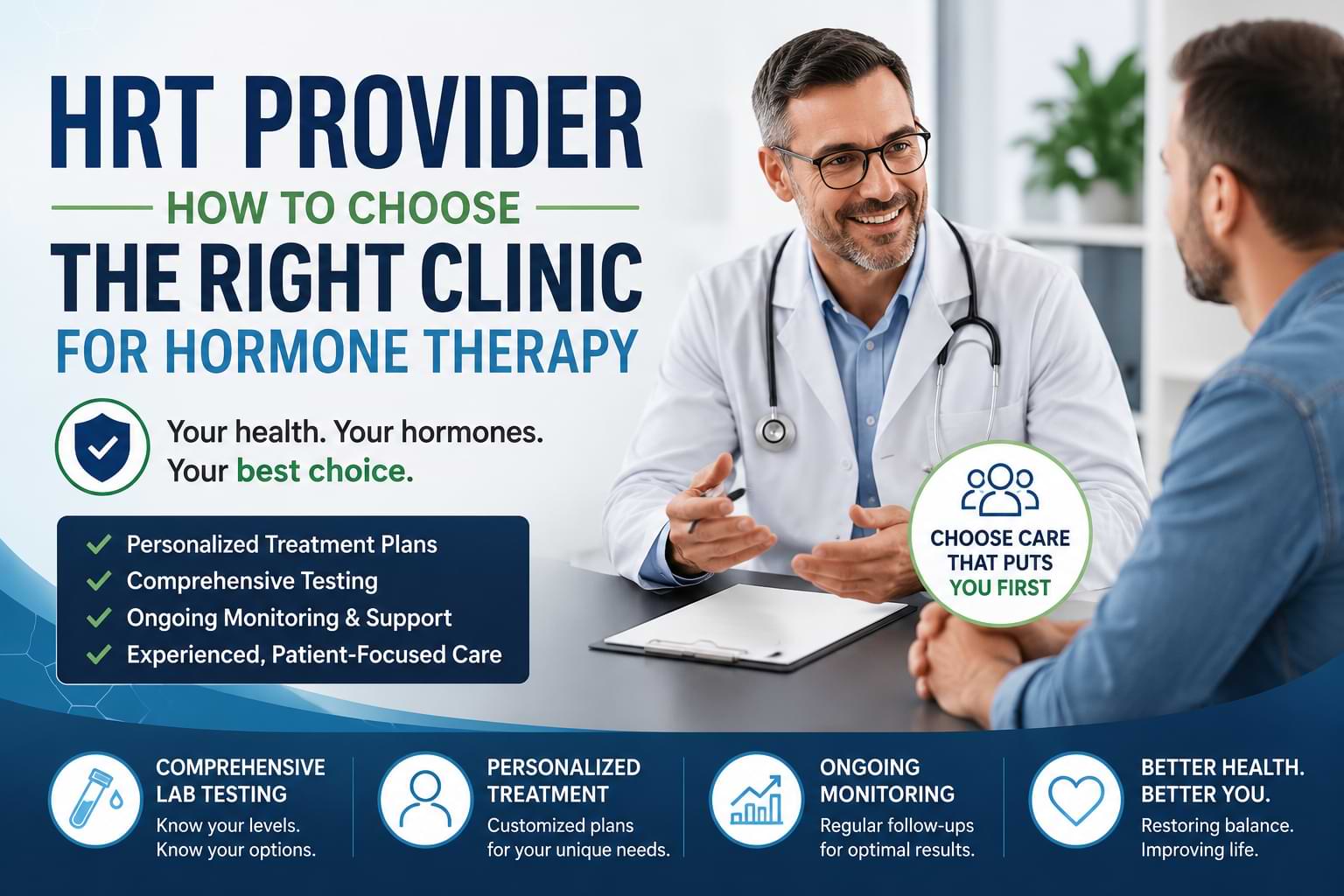
Choosing the right HRT provider is one of the most important decisions you’ll make when starting hormone replacement therapy. The provider you select will help diagnose hormone imbalances, develop a personalized treatment plan, and guide you throughout your treatment journey. Selecting a qualified provider can improve treatment outcomes and support your long-term health.
Why Your Hormone Therapy Provider Matters
An experienced HRT provider understands that hormone replacement therapy is not a one-size-fits-all treatment. Every patient has different symptoms, hormone levels, and health goals. A knowledgeable provider evaluates your medical history, reviews your symptoms, and recommends treatment based on your individual needs.
Choosing the right provider can help improve treatment effectiveness while reducing the risk of potential side effects.
What to Look for in an HRT Provider
When searching for an HRT provider, look for a clinic that offers:
- Comprehensive hormone evaluations
- Personalized treatment plans
- Routine laboratory monitoring
- Experienced medical professionals
- Ongoing patient support
- Convenient follow-up appointments, including telehealth options when available
These qualities help ensure your treatment is both safe and effective.
⚠️ Medical Disclaimer: This article is for educational purposes only and does not replace professional medical advice, diagnosis, or treatment. HRT deficiency should only be evaluated and diagnosed by a licensed healthcare provider using proper laboratory testing and medical assessment.
HRT Provider and Comprehensive Blood Testing
A trusted HRT provider should always perform a complete evaluation before prescribing hormone therapy. Blood testing helps identify hormone imbalances and provides valuable information about your overall health.
Common blood tests include:
- Total Testosterone
- Free Testosterone
- Estradiol (Estrogen)
- Complete Blood Count (CBC)
- Comprehensive Metabolic Panel (CMP)
- Lipid Panel
- Thyroid Function Tests
- PSA (when appropriate)
These tests also establish a baseline so your provider can monitor your progress throughout treatment.
How an HRT Provider Creates a Personalized Treatment Plan
A quality HRT provider develops a treatment plan based on several factors, including:
- Your medical history
- Current symptoms
- Hormone levels
- Lifestyle
- Age
- Personal health goals
Because every patient responds differently to hormone therapy, treatment may be adjusted over time to achieve the best possible results.
Why Ongoing Monitoring Is Important
Hormone levels naturally change over time, making regular follow-up appointments essential. Your hormone therapy provider should review your symptoms, monitor your blood work, and make dosage adjustments when necessary.
Routine monitoring helps improve treatment effectiveness while identifying potential concerns early, supporting safer long-term hormone therapy.
Questions to Ask Before Choosing a hormone therapy provider
Before beginning treatment, consider asking your provider:
- What blood tests are required before starting therapy?
- How often will my hormone levels be monitored?
- Is my treatment plan customized for my needs?
- How are dosage adjustments made?
- What side effects should I watch for?
- What follow-up care do you provide?
These questions can help you choose a provider who prioritizes patient safety and individualized care.
Final Thoughts on Choosing the Right Hormone Therapy Provider
Finding the right hormone therapy provider is an investment in your long-term health. Look for a clinic that emphasizes comprehensive testing, individualized treatment plans, regular monitoring, and clear communication throughout your care.
Related Reading: Also explore our articles on Calorie Miscalculation and Weight Loss, Types of Estrogen Hormone Therapy to Consider and Body Composition Changes During Weight Loss to learn more about factors that may affect your progress.
Speak With a Licensed Healthcare Provider
If weight loss has stalled despite your efforts, consult a qualified healthcare provider for personalized guidance and support.