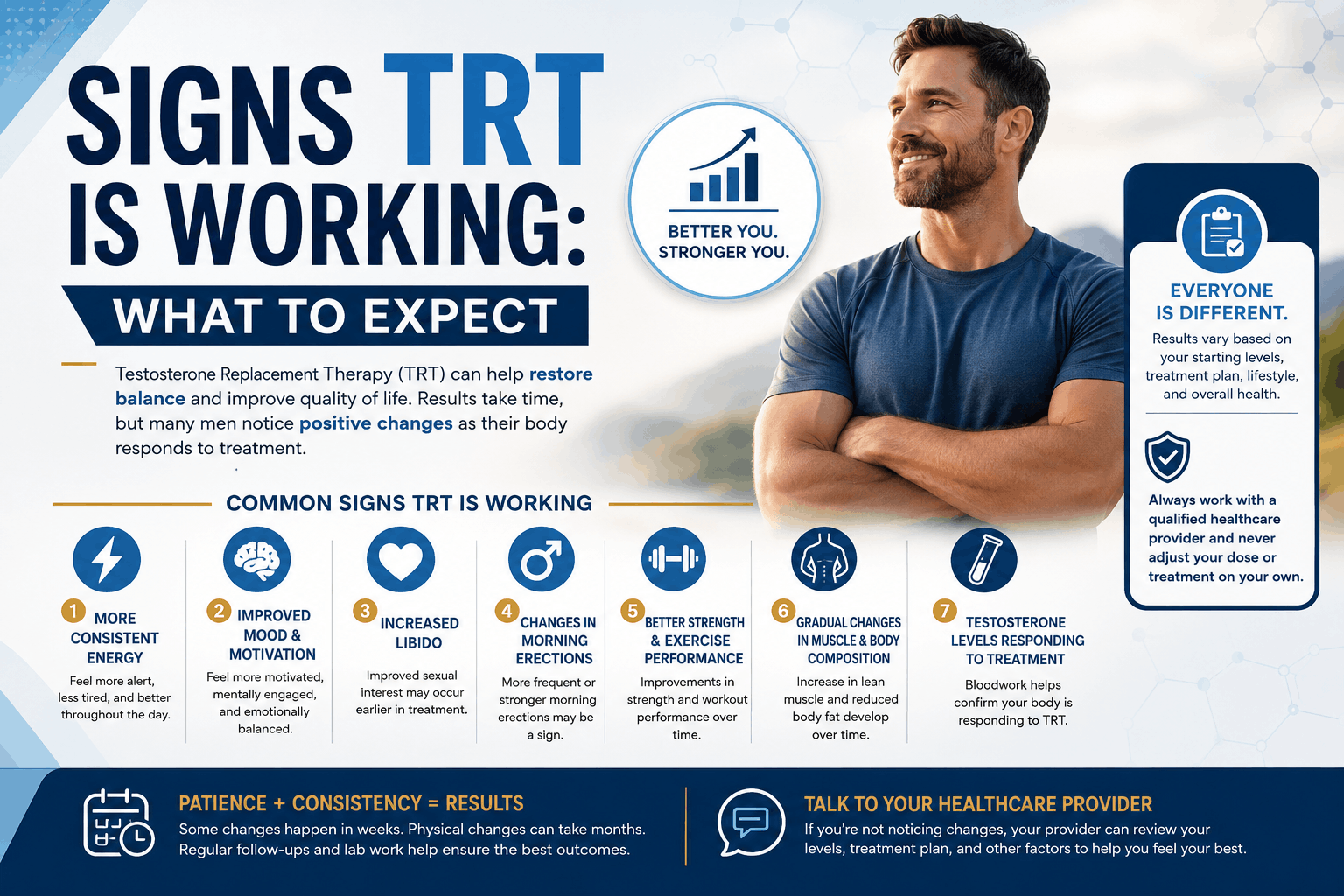
Signs TRT Is Working can vary from person to person, but many people begin noticing gradual changes after starting testosterone replacement therapy (TRT). Improvements in energy, mood, libido, sexual function, and physical performance may occur at different times depending on your starting testosterone levels, treatment plan, overall health, sleep, nutrition, and activity level.
Some changes may become noticeable within the first few weeks, while physical changes can take several months. Understanding the signs TRT is working can help you track your progress and know what to discuss with your healthcare provider.
What Are the First Signs TRT Is Working?
The first signs TRT is working may include changes in energy, mood, motivation, and sexual interest. However, everyone responds differently, and some improvements may take longer to become noticeable.
Here are some common signs TRT is working that you may notice during treatment.
1. More Consistent Energy
One of the potential early signs TRT is working is improved energy. If low testosterone was contributing to persistent fatigue, you may gradually feel more alert and less tired during the day.
The change is usually gradual rather than an immediate boost in energy.
2. Improved Mood and Motivation
Changes in mood and motivation may also be among the signs TRT is working.
Some people report feeling more motivated, mentally engaged, or emotionally balanced as testosterone levels reach an appropriate range. However, mood can be affected by many factors, including stress, sleep, medications, and other health conditions.
3. Increased Libido
An increase in sexual interest can be another noticeable sign TRT is working, particularly for people who experienced low libido before treatment.
Changes in libido may occur relatively early, but the timeline differs between individuals. Sexual function can also be influenced by cardiovascular health, stress, medications, sleep, and relationship factors.
4. Changes in Morning Erections
More frequent or stronger morning erections may be another potential sign TRT is working.
Testosterone is involved in sexual function, but erections are affected by several systems in the body. Therefore, changes in erections should be considered alongside your other symptoms and follow-up results.
Source: NIH – Onset of effects of testosterone treatment and time span until maximum effects are achieved
5. Better Strength and Exercise Performance
As treatment continues, improvements in strength and exercise performance may become noticeable.
These physical signs TRT is working generally take longer than changes in energy or libido. Resistance training, adequate nutrition, protein intake, and good sleep can also support improvements in physical performance.
6. Gradual Changes in Muscle Mass and Body Composition
Changes in lean muscle mass and body composition can develop over time.
For some people, increased muscle mass and changes in body fat may be among the longer-term signs TRT is working. These changes are gradual and should not be expected immediately after starting treatment.
TRT should not be considered a replacement for regular physical activity and a balanced diet.
7. Testosterone Levels Responding to Treatment
Symptoms are important, but bloodwork is also an important part of determining whether TRT is working appropriately.
Your healthcare provider may monitor testosterone levels and other relevant laboratory markers based on your individual treatment plan. The timing of blood tests can also matter because testosterone levels may fluctuate depending on the type of treatment and when the test is performed.
When Do Signs TRT Is Working Usually Appear?
There is no universal timeline for signs TRT is working.
Some people may notice changes in energy, mood, or libido within the first several weeks. Physical changes, including improvements in muscle mass and body composition, generally take longer.
Regular follow-up allows your healthcare provider to evaluate your symptoms, laboratory results, and overall response to treatment.
What If You Don’t Notice Signs TRT Is Working?
If you have been following your prescribed TRT plan but are not experiencing improvements, speak with your healthcare provider.
They may review your testosterone levels, treatment schedule, bloodwork timing, symptoms, medications, sleep, lifestyle, and other possible causes of persistent symptoms.
Do not change your testosterone dose or treatment schedule on your own. TRT should be prescribed and monitored by a qualified healthcare professional.
Bottom Line
The signs TRT is working may include improved energy, mood, libido, morning erections, strength, and gradual changes in muscle mass and body composition.
However, everyone responds differently to testosterone replacement therapy. The best way to evaluate your progress is to consider both your symptoms and appropriate follow-up testing with your healthcare provider.
If you’re experiencing symptoms associated with low testosterone, talk with a qualified healthcare professional to determine whether TRT may be appropriate for you and how your treatment should be monitored.