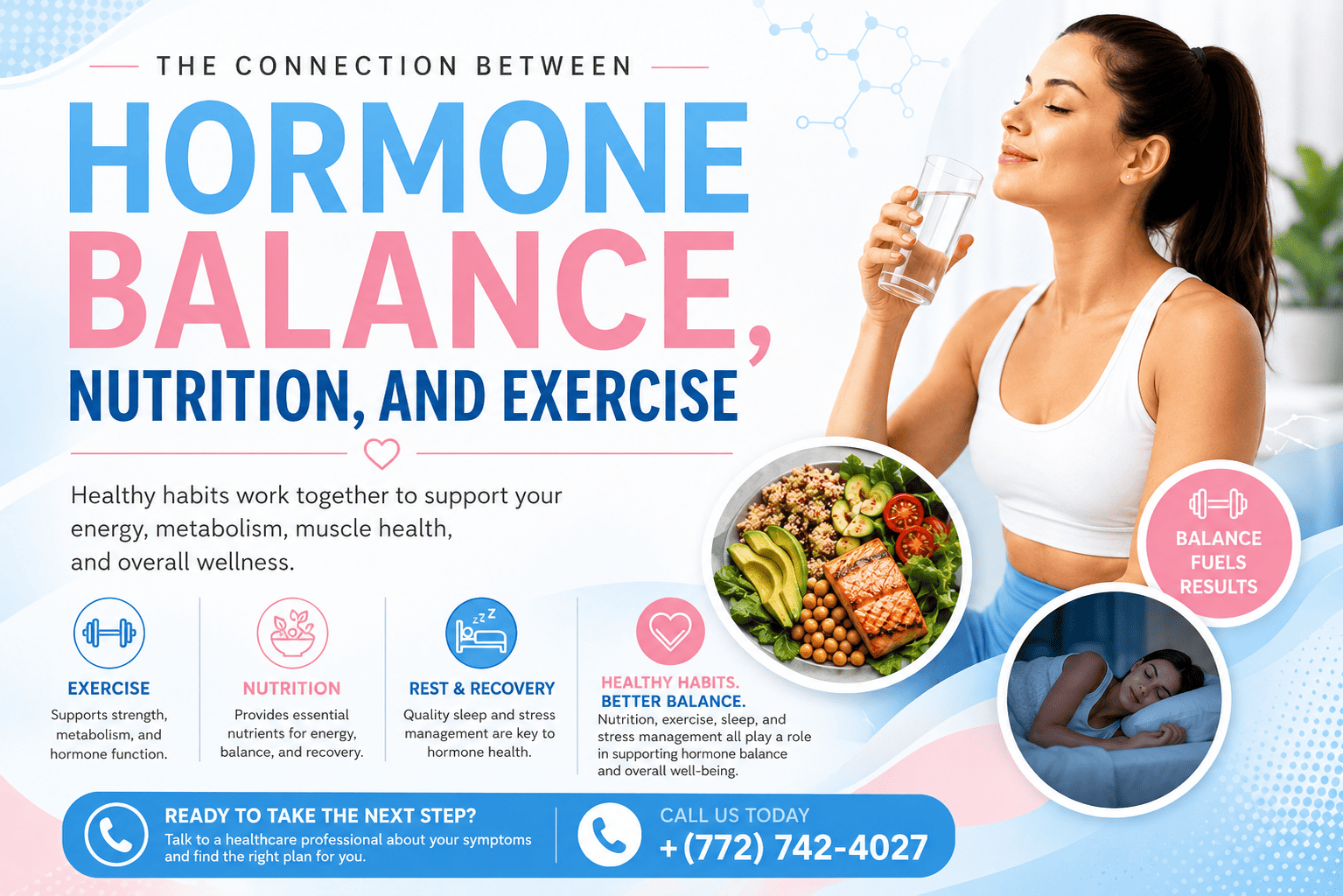
Hormone balance plays an important role in many aspects of overall health, including metabolism, energy, muscle development, sleep, mood, and reproductive health. While hormones are only one part of wellness, daily habits such as nutrition, exercise, sleep, and stress management can help support healthy hormone function.
Two important lifestyle factors are nutrition and exercise. Eating a balanced diet provides the nutrients your body needs, while regular physical activity can support metabolic health, muscle strength, and overall well-being.
Understanding the connection between hormone balance, nutrition, and exercise can help you make more informed choices about your health.
What Is Hormone Balance?
Hormone balance refers to having hormones within appropriate levels for your body and stage of life. Hormones such as insulin, cortisol, thyroid hormones, estrogen, progesterone, and testosterone all have different roles.
Hormone levels naturally change throughout life. Age, sleep, stress, nutrition, physical activity, medications, and certain medical conditions can all influence hormone function.
Because hormone health is complex, symptoms such as fatigue, changes in weight, sleep problems, or mood changes should not automatically be attributed to a hormone imbalance. A healthcare professional can help determine the possible cause through an appropriate evaluation.
How Nutrition Supports Hormone Balance
Your body needs adequate calories, protein, healthy fats, vitamins, minerals, and other nutrients to perform normally. Consistently following an overly restrictive diet or lacking important nutrients can make it harder to maintain overall health.
Focus on Protein
Protein provides amino acids needed for muscle repair and many other bodily processes. Good sources include eggs, fish, poultry, lean meats, beans, lentils, Greek yogurt, and other protein-rich foods.
Getting enough protein can be particularly important when combined with resistance training because both nutrition and exercise support muscle maintenance.
Include Healthy Fats
Dietary fats are an important source of energy and help the body absorb fat-soluble vitamins. Foods such as avocados, nuts, seeds, olive oil, and fatty fish can be part of a balanced eating pattern.
Rather than eliminating fats, focus on choosing nutritious sources and maintaining an overall balanced diet.
Eat a Variety of Whole Foods
Vegetables, fruits, whole grains, legumes, lean proteins, and minimally processed foods provide a range of nutrients and fiber.
A varied diet can also support digestive and metabolic health, which are important parts of overall wellness.
⚠️ Medical Disclaimer: This article is for educational purposes only and does not replace professional medical advice, diagnosis, or treatment. Weight loss challenges can have various causes and should be evaluated by a qualified healthcare provider who can offer personalized recommendations based on your individual health needs.
How Exercise Supports Hormone Balance
Physical activity creates changes throughout the body, including temporary changes in several hormones. Regular exercise can also support important areas of health such as cardiovascular fitness, insulin sensitivity, muscle strength, and body composition.
Resistance Training
Strength training can help build and maintain muscle mass. Maintaining muscle becomes increasingly important with age and can support physical function and metabolic health.
Exercises such as squats, rows, presses, lunges, and other resistance movements can be included based on your fitness level and abilities.
Cardiovascular Exercise
Walking, cycling, swimming, jogging, and other aerobic activities can support heart health and fitness.
You don’t necessarily need intense workouts every day. Consistent movement that fits your lifestyle can be a sustainable way to stay active.
Avoid Overtraining
More exercise isn’t always better. High training loads combined with inadequate nutrition and insufficient recovery can place additional stress on the body.
Rest days, adequate nutrition, hydration, and quality sleep are important parts of an effective exercise routine.
The Role of Sleep, Stress, and Hormone Balance
Nutrition and exercise are important, but they are not the entire picture.
Sleep and stress management also influence how your body functions. Poor sleep can affect appetite, energy, recovery, and metabolic health. Chronic stress can also influence cortisol and other physiological processes.
Creating a consistent sleep schedule, taking recovery days, staying physically active, and finding healthy ways to manage stress can complement a balanced nutrition and exercise routine.
Source: HealthLine – How Female Hormones Affect Exercise at Every Age
Why Nutrition and Exercise Work Better Together
Think of nutrition and exercise as complementary rather than separate strategies.
Nutrition provides the building blocks and energy your body needs. Exercise challenges your muscles and cardiovascular system while supporting physical fitness. Recovery allows your body to adapt to those demands.
For example, someone who wants to improve muscle strength may benefit from combining resistance training with adequate protein and overall nutrition. Someone focused on metabolic health may benefit from regular physical activity alongside a balanced eating pattern.
The goal isn’t to find one food or exercise that “balances” hormones. Instead, sustainable habits can support overall health and help your body function properly.
When Should You Talk to a Healthcare Professional?
If you experience persistent changes in energy, weight, sleep, mood, sexual function, menstrual cycles, or other aspects of your health, consider speaking with a qualified healthcare professional.
Hormone-related symptoms can have many possible causes. Testing and medical evaluation may be appropriate before starting hormone therapy, supplements, or major dietary changes.
If a hormone condition is identified, your healthcare provider can help determine the appropriate treatment and monitoring plan.
Building a Sustainable Approach to Hormone Health
Supporting hormone health doesn’t require an extreme diet or complicated workout program.
Start with manageable habits:
- Eat a varied, nutrient-dense diet.
- Include adequate protein and healthy fats.
- Exercise regularly with a combination of strength and aerobic activity.
- Prioritize sleep and recovery.
- Stay hydrated.
- Manage stress through healthy routines.
- Avoid relying on unproven supplements or quick fixes.
- Talk with a healthcare professional about persistent symptoms.
Bottom Line
Hormone balance, nutrition, and exercise are closely connected to overall health. While lifestyle habits cannot correct every hormone-related condition, eating well, staying active, getting enough sleep, and allowing your body to recover can provide a strong foundation for wellness.
If you are experiencing persistent symptoms that may be related to hormones, professional evaluation can help identify what is actually happening and what options may be appropriate for you.
Ready to Take the Next Step Toward Better Hormone Health?
Nutrition, exercise, sleep, and stress management can all contribute to your overall wellness. If you’re experiencing persistent symptoms or have questions about your hormone health, professional guidance can help you better understand your options.
Hormone Online provides personalized hormone care through convenient online consultations, including HRT, TRT, lab testing, and other wellness programs.
Ready to learn more? Contact Hormone Online today and take the next step toward understanding your hormone health.