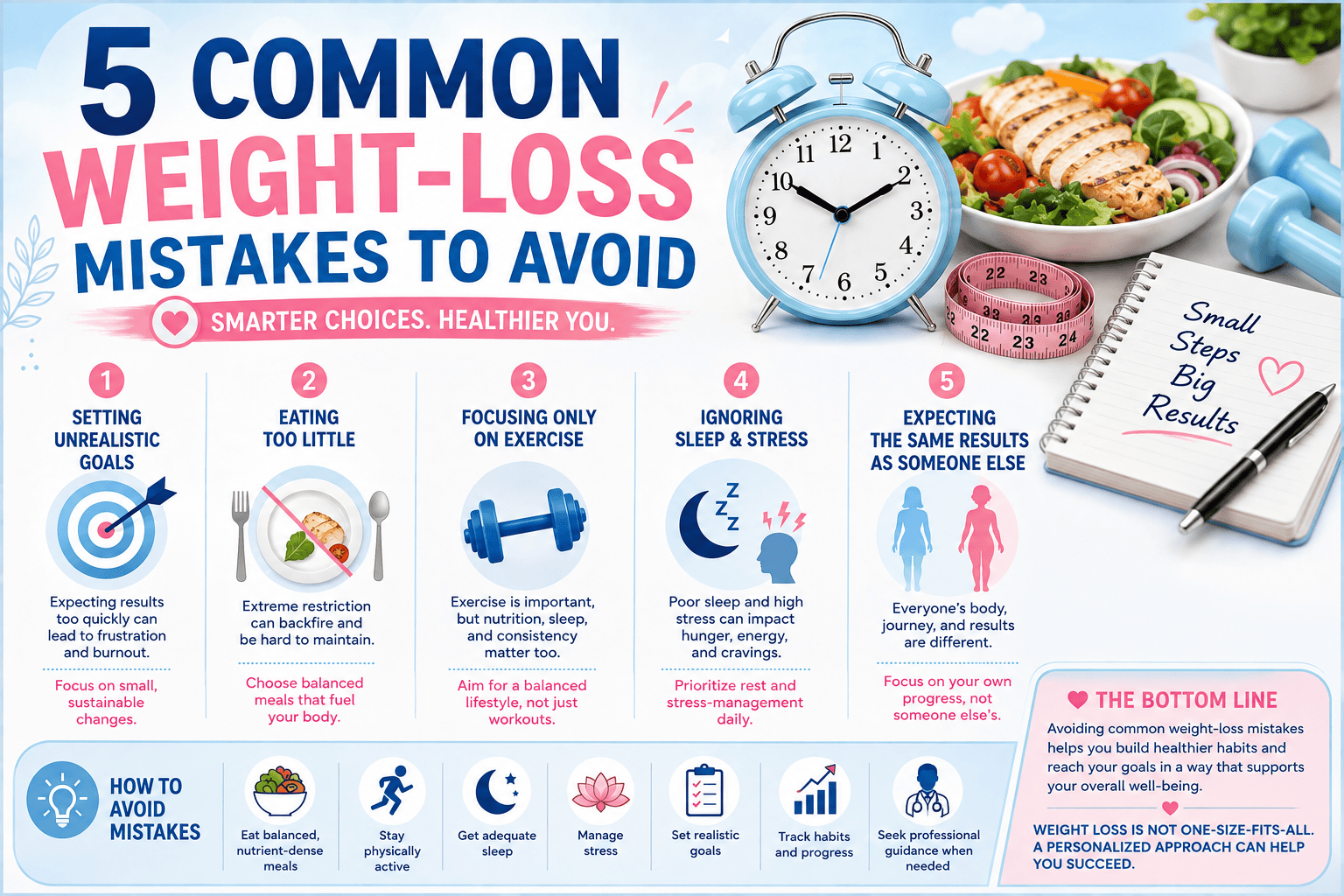
Losing weight can take time, consistency, and a realistic approach. While many people focus on what they should eat or how much they should exercise, it is also important to recognize the weight-loss mistakes that can make progress more difficult.
Some common habits may seem helpful at first but can be difficult to maintain or may work against your long-term goals. Understanding these mistakes can help you build healthier and more sustainable habits.
Here are five common weight-loss mistakes to watch out for.
Weight-Loss Mistake #1: Setting Unrealistic Goals
One of the most common weight-loss mistakes is expecting results too quickly. Setting an aggressive goal can create unnecessary pressure and make it harder to stay consistent.
Weight management is influenced by many factors, including nutrition, physical activity, sleep, stress, medications, and individual health needs. Your progress may not always happen at the same rate every week.
Instead of focusing only on a specific number on the scale, consider setting smaller goals such as:
- Eating more balanced meals
- Increasing daily movement
- Drinking enough water
- Improving sleep habits
- Following a consistent eating routine
Small, sustainable changes can be easier to maintain over time.
Weight-Loss Mistake #2: Eating Too Little
Cutting calories drastically may seem like a quick way to lose weight, but eating too little can make a healthy eating routine difficult to maintain.
Extreme restriction can leave you feeling hungry, tired, or frustrated. It may also make it harder to stick with your nutrition plan over time.
Rather than eliminating large portions of your diet, focus on balanced meals that include nutritious sources of protein, vegetables, fruits, whole grains, and healthy fats.
If you are unsure how much food or how many calories are appropriate for your individual needs, consider speaking with a qualified healthcare professional or registered dietitian.
Weight-Loss Mistake #3: Focusing Only on Exercise
Exercise can be an important part of a healthy lifestyle, but another common weight-loss mistake is assuming that exercise alone will solve everything.
Physical activity can support calorie expenditure, cardiovascular health, strength, mobility, and overall well-being. However, nutrition, sleep, stress management, and other lifestyle factors also play important roles in weight management.
A more balanced approach can include:
- Regular physical activity
- Strength training
- Cardiovascular exercise
- Nutritious meals
- Adequate sleep
- Stress-management strategies
The goal is to create habits that support your overall health rather than relying on one strategy.
⚠️ Medical Disclaimer: This article is for educational purposes only and does not replace professional medical advice, diagnosis, or treatment. Weight loss challenges can have various causes and should be evaluated by a qualified healthcare provider who can offer personalized recommendations based on your individual health needs.
#4: Ignoring Sleep and Stress
When people think about weight loss, sleep and stress are often overlooked.
Poor sleep and ongoing stress can affect your energy, appetite, food choices, and ability to maintain healthy routines. If you are constantly tired or stressed, it may become harder to prepare balanced meals or stay physically active.
Try creating a consistent sleep schedule and making time for activities that help you manage daily stress.
Simple habits such as walking, stretching, limiting screen time before bed, and practicing relaxation techniques may help support a healthier routine.
#5: Comparing Your Progress to Others
Another important weight-loss mistake is comparing your progress to another person’s.
Everyone’s body and circumstances are different. Two people can follow similar routines and experience different results because of differences in genetics, lifestyle, medications, activity levels, nutrition, sleep, and other factors.
Instead of comparing yourself with someone else’s timeline, track your own progress and focus on habits you can maintain.
If you have been consistently working toward your goals without seeing the results you expect, a healthcare professional can help evaluate your situation and discuss appropriate options.
How to Avoid Common Weight-Loss Mistakes
A sustainable approach to weight management does not have to involve extreme diets or unrealistic expectations. Start with manageable changes and give yourself time to develop consistent habits.
Consider focusing on:
- Eating balanced, nutrient-dense meals
- Staying physically active
- Getting adequate sleep
- Managing stress
- Setting realistic goals
- Tracking habits and progress
- Seeking professional guidance when needed
For some individuals, lifestyle changes alone may not provide the desired results. A healthcare professional can help determine whether additional weight-management strategies may be appropriate based on your health and individual needs.
Source: HealthLine – 15 Common Mistakes When Trying to Lose Weight
The Bottom Line
Avoiding common weight-loss mistakes can help you approach weight management with more realistic expectations. Skipping meals, setting unrealistic goals, relying only on exercise, neglecting sleep and stress, and comparing your progress with others can make the process more challenging.
Instead, focus on sustainable habits that support your overall health. If you are struggling to reach your weight-management goals, consider talking with a qualified healthcare professional about options that may be appropriate for you.
Weight loss is not one-size-fits-all. A personalized approach can help you work toward your goals while supporting your overall well-being.
Ready to take the next step toward your weight-loss goals? Learn how personalized, medically monitored treatment may support your journey. Contact HormoneOnline today.
You May Also Find These Articles Helpful:
- Hormones Importance Fitness Health: Why Exercise Is Essential for Your Body and Mind
- Healthy Life Habits: Simple Daily Practices for Better Health and Hormone Balance
- Can HRT Make You Look Younger? Here’s What You Need to Know
- What Is Natural Hormone Replacement Therapy?