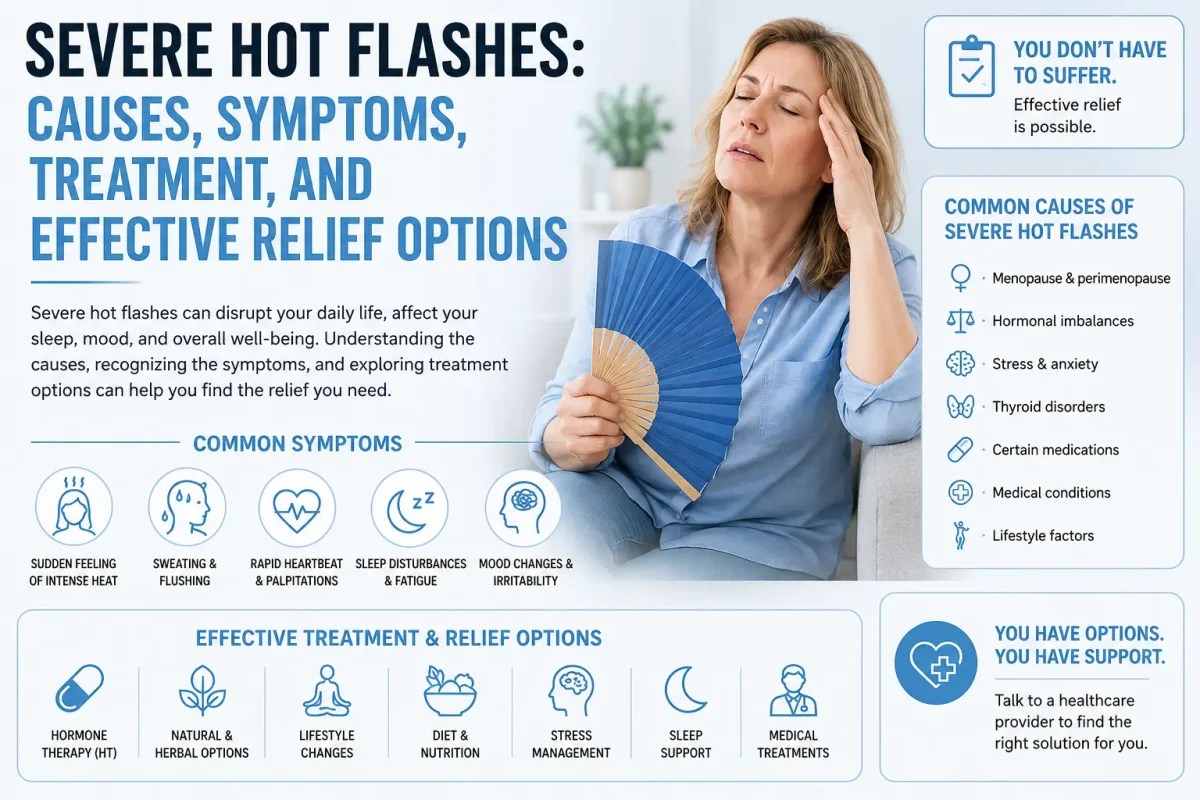
Menopause is a natural stage of life, but the changes it brings can affect your daily comfort, sleep, mood, and overall well-being. Hot flashes, night sweats, vaginal dryness, and sleep disturbances are some of the symptoms that can make this transition challenging.
For women experiencing bothersome symptoms, hormone replacement therapy (HRT) may offer relief. However, many women have questions about its safety. Does HRT increase the risk of breast cancer? Can it affect heart health? Are there safer treatment options?
The short answer is that HRT can be a safe and effective treatment for many women when a healthcare professional selects it based on their individual health needs. However, it is not suitable for everyone, and its benefits and risks depend on several factors.
In this guide, we will explain how HRT works, its potential benefits, possible risks, and what to consider before starting treatment.
What Is HRT for Menopause?
Hormone replacement therapy, also called menopausal hormone therapy (MHT), is a medical treatment that uses hormones to relieve certain symptoms associated with menopause.
During menopause, the ovaries gradually reduce their production of estrogen and progesterone. These hormonal changes can affect several parts of the body, including the brain, bones, reproductive system, and urinary tract.
HRT helps manage some of these changes by providing estrogen, with or without a progestogen, depending on the patient’s medical needs.
Doctors commonly recommend HRT to manage:
-
Hot flashes and night sweats.
-
Vaginal dryness and discomfort.
-
Pain during sexual activity related to vaginal dryness.
-
Certain sleep disturbances associated with night sweats.
-
Bone loss associated with menopause.
HRT does not stop the natural aging process or reverse menopause. Instead, it helps manage specific symptoms and, in some cases, protects against bone loss.
Is HRT Safe for Managing Menopause?
For many healthy women experiencing bothersome menopause symptoms, HRT can be an appropriate treatment option.
According to The Menopause Society, the benefit-risk balance is generally favorable for healthy women who start hormone therapy before age 60 or within 10 years of menopause onset, provided they have no medical contraindications.
However, this does not mean HRT is automatically safe for everyone in this age group.
Your personal health history matters. Factors such as previous blood clots, cardiovascular disease, breast cancer, unexplained vaginal bleeding, and liver disease can affect whether hormone therapy is appropriate.
The type of hormone, dosage, delivery method, and duration of treatment also influence the overall risk.
The most important point is that HRT safety should be evaluated individually rather than judged by one general rule.
What Are the Benefits of HRT During Menopause?
When prescribed appropriately, HRT can help manage several common menopause-related concerns.
1. Helps Reduce Hot Flashes and Night Sweats
Hot flashes and night sweats are known as vasomotor symptoms. They can cause sudden feelings of heat, sweating, flushing, and discomfort.
These symptoms may interrupt sleep, affect concentration, and make everyday activities uncomfortable.
Systemic estrogen therapy is considered the most effective treatment for bothersome hot flashes and night sweats.
2. Helps Relieve Vaginal Dryness
Lower estrogen levels can cause changes in vaginal and urinary tissues. These changes may lead to dryness, irritation, discomfort, and painful sexual activity.
Low-dose vaginal estrogen can help improve vaginal tissue health and relieve these symptoms.
Unlike systemic HRT, local vaginal estrogen delivers treatment primarily to vaginal tissues, with generally much lower absorption into the bloodstream.
3. Supports Bone Health
Estrogen helps maintain bone density. After menopause, declining estrogen levels can accelerate bone loss and increase the risk of osteoporosis.
Systemic HRT can help prevent bone loss and reduce fracture risk in appropriate women.
However, doctors do not generally prescribe HRT solely to prevent osteoporosis when other treatments may be more suitable for an individual’s health needs.
4. May Improve Sleep and Daily Comfort
Night sweats and hot flashes can interrupt sleep and contribute to daytime fatigue.
By reducing these symptoms, HRT may help some women experience better sleep and improved daily comfort.
However, HRT is not a general treatment for every sleep problem. Conditions such as sleep apnea, anxiety, and insomnia may require separate evaluation.
5. May Improve Menopause-Related Quality of Life
Persistent menopause symptoms can affect work, relationships, exercise, and everyday activities.
For women who respond well to treatment, symptom relief may improve comfort and quality of life.
The results vary, so treatment should focus on the symptoms that matter most to each patient.
What Are the Potential Risks and Side Effects of HRT?
Although HRT can provide meaningful relief, it also carries potential risks.
The type of therapy, route of administration, dose, duration, age, and medical history all influence these risks.
Here are some important considerations.
1. Breast Cancer Risk
Breast cancer is one of the most common concerns surrounding menopause hormone therapy.
Research shows that breast cancer risk differs depending on the type of hormone therapy used.
Combined estrogen-progestogen therapy has been associated with an increased risk of breast cancer, particularly with longer use. Estrogen-only therapy has a different risk profile, especially among women who have undergone a hysterectomy.
These findings do not mean every woman taking HRT will develop breast cancer. However, personal and family history, treatment type, and duration should be part of the discussion with a healthcare professional.
Women with a history of hormone-sensitive breast cancer generally need specialist guidance, and systemic HRT is usually avoided.
2. Blood Clots
Systemic hormone therapy can increase the risk of venous thromboembolism, which includes deep vein thrombosis (DVT) and pulmonary embolism (PE).
A DVT occurs when a blood clot forms in a deep vein, usually in the leg. If part of the clot travels to the lungs, it can cause a potentially life-threatening pulmonary embolism.
Oral estrogen is generally associated with a higher risk of blood clots than transdermal estrogen, such as patches, gels, or sprays.
However, transdermal treatment is not automatically risk-free. Your healthcare provider should consider your personal risk factors before recommending a formulation.
3. Stroke and Cardiovascular Risks
The effects of HRT on cardiovascular health depend partly on when treatment begins and the patient’s existing health conditions.
For healthy women who start hormone therapy before age 60 or within 10 years of menopause, the overall benefit-risk balance is generally more favorable when treatment is used for appropriate symptoms.
Starting systemic HRT later, particularly more than 10 years after menopause or after age 60, may involve greater absolute risks of coronary heart disease, stroke, and blood clots.
HRT should not be used solely to prevent heart disease or protect against a future cardiovascular event.
4. Endometrial Cancer Risk
The endometrium is the lining of the uterus.
Using systemic estrogen without adequate progestogen in a woman who still has a uterus can cause the uterine lining to thicken. Over time, this may increase the risk of endometrial cancer.
Adding an appropriate progestogen helps protect the uterine lining from the effects of systemic estrogen.
Women who have had a hysterectomy may be candidates for estrogen-only therapy, depending on their medical history and other clinical factors.
Any unexplained vaginal bleeding during or after menopause should be evaluated by a healthcare professional.
5. Gallbladder Problems
Estrogen therapy may increase the risk of gallbladder disease, including gallstones.
This risk can be influenced by the route of administration and other individual health factors. Oral estrogen has been associated with a greater risk than some nonoral formulations.
Discuss any history of gallbladder problems with your healthcare provider before starting HRT.
What Did the FDA Change About HRT Safety Warnings in 2026?
In February 2026, the U.S. Food and Drug Administration (FDA) approved labeling changes for six menopausal hormone therapy products.
The changes removed certain statements about cardiovascular disease, breast cancer, and probable dementia from the products’ boxed warnings, which are the most prominent safety warnings on prescription drug labels.
This decision followed the FDA’s review of available scientific evidence and its efforts to improve how the benefits and risks of menopause hormone therapy are communicated.
However, there is an important distinction:
Removing certain statements from a boxed warning does not mean that all risks have disappeared.
Risk information about cardiovascular disease and breast cancer remains in other sections of applicable product labeling. The boxed warning about endometrial cancer also remains for systemic estrogen-only products where it applies.
The FDA update does not mean every woman should start HRT. Instead, it supports more individualized discussions about treatment benefits, risks, and medical history.
What Types of HRT Are Available for Menopause?
HRT comes in different forms. Your healthcare provider can help determine which option best matches your symptoms and medical history.
1. Estrogen-Only Therapy
Estrogen-only therapy provides estrogen without a progestogen.
Doctors may prescribe it for women who have had a hysterectomy, depending on their medical circumstances.
It is available in several forms, including:
-
Tablets.
-
Skin patches.
-
Gels.
-
Sprays.
Women who still have a uterus generally need adequate progestogen protection when using systemic estrogen.
2. Combined Estrogen and Progestogen Therapy
Combined HRT includes estrogen and a progestogen.
The progestogen protects the uterine lining against the effects of systemic estrogen.
Depending on the product and treatment plan, the hormones may be taken together continuously or through a sequential schedule.
Combined therapy may be available as tablets, patches, or separate medications.
3. Local Vaginal Estrogen Therapy
Local vaginal estrogen is designed to treat symptoms affecting vaginal and nearby urinary tissues.
It may be available as:
-
Vaginal creams.
-
Vaginal tablets or inserts.
-
Vaginal rings.
Because these products generally deliver lower doses directly to local tissues, systemic absorption is much lower than with systemic hormone therapy.
For many women with vaginal dryness or discomfort alone, local treatment may be more appropriate than whole-body HRT.

Who May Be a Good Candidate for HRT?
HRT may be worth discussing with a healthcare professional if you experience moderate to severe menopause symptoms that affect your daily life.
Women who may benefit include those who:
-
Experience frequent hot flashes or night sweats.
-
Have vaginal dryness or discomfort.
-
Experience menopause-related symptoms that affect sleep and daily activities.
-
Have early menopause or primary ovarian insufficiency.
-
Need treatment to help prevent bone loss and have an appropriate medical indication.
The benefit-risk balance is generally more favorable for healthy symptomatic women younger than 60 or within 10 years of menopause onset who have no contraindications.
However, age alone does not determine eligibility. Your medical history and individual circumstances remain important.
Who Should Avoid or Use Extra Caution With HRT?
Systemic HRT is generally not recommended for women with certain medical conditions or histories.
These may include:
-
Previous breast cancer or other hormone-sensitive cancer.
-
Unexplained vaginal bleeding.
-
Previous or current blood clots.
-
A history of stroke or heart attack.
-
Active or significant liver disease.
Some women with a history of these conditions may have other treatment options, but they need individualized medical advice.
For example, low-dose vaginal estrogen may be considered in certain situations where systemic HRT is not appropriate. However, women with a history of hormone-sensitive cancer should discuss this option with their oncology and menopause care teams.
Never begin hormone therapy without discussing your medical history with a qualified healthcare professional.
How Long Can You Safely Take HRT?
There is no single treatment duration that applies to every woman.
Some women use HRT for a relatively short period, while others may need longer treatment because their symptoms continue or return after stopping.
The decision to continue therapy depends on:
-
Whether symptoms remain bothersome.
-
The type of hormone therapy being used.
-
Your age and time since menopause.
-
Your personal medical history.
-
Your response to treatment.
-
Any new health risks that develop.
Regular follow-up appointments help your healthcare professional reassess whether the benefits continue to outweigh the risks.
The goal is not to follow an arbitrary stopping date. Instead, treatment should have a clear medical purpose and receive periodic review.
Are Bioidentical Hormones Safer for Menopause?
You may have heard about bioidentical hormone therapy as a more natural or safer alternative to traditional HRT.
Bioidentical hormones are designed to have the same molecular structure as hormones naturally produced by the human body.
However, the term can describe two different categories of products:
FDA-approved bioidentical hormones: These are regulated medications that have undergone FDA review for safety, quality, and effectiveness for their approved uses.
Compounded bioidentical hormones: These are custom-made preparations mixed by a compounding pharmacy. They are not FDA-approved in the same way as commercially manufactured medications.
There is no reliable evidence that compounded bioidentical hormones are safer or more effective than FDA-approved hormone therapies.
Compounded products may also have less predictable dosing and quality. Therefore, women should not assume that a product is safer simply because it is described as natural or bioidentical.
Ask your healthcare professional about FDA-approved options and the evidence supporting your treatment.
What Are the Alternatives to HRT for Managing Menopause?
HRT is not the only way to manage menopause symptoms. Some women cannot use hormone therapy, while others prefer nonhormonal approaches.
Depending on the symptoms, alternatives may include:
Nonhormonal Prescription Medications
Certain prescription medications can help reduce hot flashes and night sweats.
Options may include selected antidepressants, gabapentin, and the neurokinin 3 receptor antagonist fezolinetant.
A healthcare professional can explain which medications are appropriate and review their potential side effects.
Vaginal Moisturizers and Lubricants
Over-the-counter vaginal moisturizers may help manage dryness, while lubricants can reduce friction and discomfort during sexual activity.
These products may be useful for women with mild symptoms or those who prefer nonhormonal options.
Lifestyle Adjustments
Healthy habits may support overall well-being during menopause.
Consider:
-
Maintaining a regular sleep schedule.
-
Exercising regularly, including strength and weight-bearing activities.
-
Eating a balanced diet.
-
Limiting alcohol if it triggers symptoms.
-
Avoiding personal hot-flash triggers when possible.
-
Practicing relaxation techniques.
Lifestyle changes may improve general health and help some symptoms, but they do not replace medical treatment when symptoms are severe.
How Can You Start HRT Safely?
If you are considering HRT, begin with a medical consultation rather than selecting a hormone product on your own.
A healthcare professional will typically:
-
Review your symptoms: Discuss hot flashes, sleep changes, vaginal symptoms, and other concerns.
-
Evaluate your medical history: Consider your age, menopause stage, family history, medications, and previous health conditions.
-
Assess possible contraindications: Review any history of breast cancer, blood clots, cardiovascular disease, liver disease, or unexplained bleeding.
-
Discuss suitable treatment options: Compare systemic and local therapies, including different formulations and delivery methods.
-
Develop an individualized plan: Select an appropriate treatment based on your symptoms and health profile.
-
Arrange follow-up care: Review symptom improvement, side effects, and whether treatment should continue or change.
Routine hormone blood tests are not usually necessary to diagnose menopause in otherwise healthy women over 45 with typical symptoms. Testing may be appropriate in certain circumstances, such as suspected premature menopause or an unclear diagnosis.

Frequently Asked Questions About HRT and Menopause
1. Is HRT safe for women going through menopause?
HRT can be appropriate for many healthy women experiencing bothersome menopause symptoms, particularly when started before age 60 or within 10 years of menopause onset. However, safety depends on personal health history, treatment type, and individual risk factors.
2. Does HRT increase the risk of breast cancer?
Combined estrogen-progestogen therapy has been associated with an increased risk of breast cancer, particularly with longer use. Estrogen-only therapy has a different risk profile. Your personal risk depends on several factors and should be discussed with your healthcare professional.
3. Does HRT cause weight gain?
Research does not establish HRT as a direct cause of significant weight gain. Body composition can change during midlife because of aging, hormonal changes, sleep, activity, and other factors. HRT is not a weight-loss treatment.
4. Can I take HRT after age 60?
Some women may continue or begin hormone therapy after age 60, but the decision requires careful evaluation. Starting systemic HRT later after menopause generally involves a less favorable benefit-risk balance because certain cardiovascular and clotting risks increase with age.
5. Is estrogen-only therapy safer than combined HRT?
Not necessarily. The two treatments have different benefits and risks. Estrogen-only therapy may be appropriate for women without a uterus, while women with an intact uterus generally need progestogen protection when using systemic estrogen. The best option depends on individual circumstances.
6. Is vaginal estrogen safer than systemic HRT?
Low-dose vaginal estrogen generally results in much lower systemic hormone exposure than systemic HRT. It is often used for vaginal and urinary symptoms rather than hot flashes and night sweats. However, individual medical history still matters.
7. Do I need hormone testing before starting HRT?
Not always. For women over 45 with typical menopause symptoms, doctors can often make a clinical diagnosis without routine hormone testing. Testing may be useful when symptoms are unusual, menopause occurs early, or the diagnosis is uncertain.
8. Can I stop HRT whenever I want?
You should discuss stopping or changing treatment with your healthcare professional. Some women experience returning symptoms after stopping HRT. Your provider can help you consider the appropriate approach based on your symptoms and treatment history.
Final Thoughts: Is HRT Worth Considering for Menopause?
Hormone replacement therapy can be an effective option for managing bothersome menopause symptoms. It may help reduce hot flashes, night sweats, and vaginal discomfort while also supporting bone health in appropriate women.
However, HRT is not risk-free, and it is not suitable for everyone. Breast cancer history, blood clots, cardiovascular conditions, uterine health, and other medical factors can influence treatment decisions.
The best approach is to understand your options, discuss your personal risk factors with a qualified healthcare professional, and choose a treatment plan that meets your needs.
Explore Hormone Care with Hormone Online
Every woman’s menopause experience is different. If you want to learn more about hormone replacement therapy and available care options, visit Hormone Online or contact our team for more information.
We Offer Telemedicine Hormone Replacement Therapy Services.
Access expert HRT care from the comfort of your home. We provide virtual consultations in these key cities and regions.
➡️ Start Your Virtual Consultation Today! / Hormone Replacement Therapy Port Saint Lucie
Take the Next Step Toward Optimized Living
Your wellness journey doesn’t end here. It evolves with the right guidance, research, and support.
Subscribe to Hormone Online Insights
Connect with a Hormone Specialist
Explore Our Evidence Based Resource Library