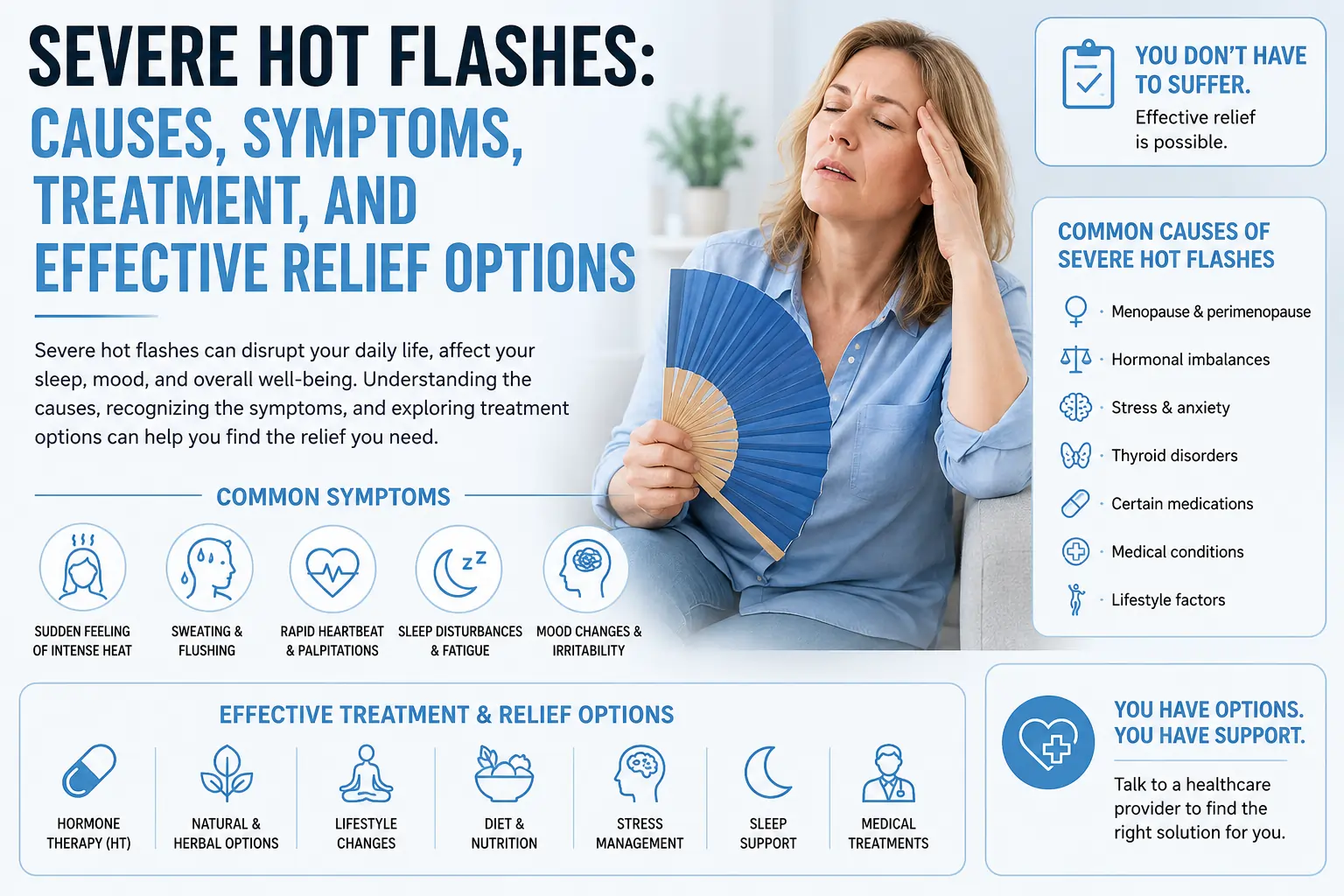
Are Severe Hot Flashes Taking Over Your Life?
Do you suddenly feel an intense wave of heat rushing through your body, leaving you drenched in sweat and desperately searching for relief? If you’re experiencing severe hot flashes, you’re not alone. For many women, severe hot flashes are one of the most challenging symptoms of perimenopause and menopause, affecting sleep, work performance, emotional well-being, and overall quality of life.
The good news is that understanding the causes, triggers, and treatment options for hot flashes can help you regain control and find lasting relief. In this comprehensive guide, we’ll explain everything you need to know about severe hot flashes, including why they happen, how they affect your body, and the most effective ways to manage them.
What Are Severe Hot Flashes?
Intense hot flashes are sudden episodes of intense body heat that can cause excessive sweating, facial flushing, rapid heartbeat, and discomfort. Unlike mild hot flashes that occur occasionally, severe hot flashes may happen several times throughout the day and night, significantly disrupting daily life.
A severe hot flash often begins in the chest, neck, or face before spreading throughout the body. These episodes can last from a few seconds to several minutes and may be followed by chills as the body cools down.
Many women describe hot flashes as feeling like an internal furnace has suddenly turned on without warning.
What Causes Severe Hot Flashes?
The primary cause of intense hot flashes is hormonal changes, particularly declining estrogen levels during menopause and perimenopause.
Estrogen helps regulate the body’s temperature control center, known as the hypothalamus. When estrogen levels fluctuate or decrease, the hypothalamus becomes more sensitive to small temperature changes.
As a result, the body mistakenly believes it is overheating and responds by:
- Increasing blood flow to the skin
- Expanding blood vessels
- Triggering sweating
- Raising heart rate
- Attempting to cool the body rapidly
These reactions create the uncomfortable symptoms associated with hot flashes.
Who Is Most at Risk for Severe Hot Flashes?
Several factors may increase the likelihood of experiencing hot flashes.
Perimenopause and Menopause
Women transitioning into menopause commonly experience severe hot flashes due to fluctuating hormone levels.
Surgical Menopause
Women who have had their ovaries removed may develop more intense severe hot flashes because estrogen levels drop suddenly.
Obesity
Excess body weight may contribute to more frequent and intense hot flashes by affecting temperature regulation.
Smoking
Smoking has been linked to an increased risk of hot flashes and other menopausal symptoms.
Stress and Anxiety
Stress activates the nervous system and can worsen hot flashes or make them occur more frequently.
Certain Medications
Some cancer treatments and hormone-related therapies may trigger hot flashes as a side effect.
Symptoms of Severe Hot Flashes
The symptoms of severe hot flashes can vary from person to person, but commonly include:
Intense Heat Sensation
A sudden feeling of overwhelming warmth spreads through the upper body.
Excessive Sweating
Heavy sweating may occur regardless of room temperature.
Facial Flushing
The face, neck, and chest may become visibly red.
Rapid Heartbeat
Some women experience palpitations or a racing heart during intense hot flashes.
Chills Afterward
As the body cools down, shivering or chills may follow.
Night Sweats
hot flashes often occur during sleep and can cause significant sleep disruption.
Fatigue
Interrupted sleep frequently leads to daytime exhaustion and difficulty concentrating.
How Severe Hot Flashes Impact Daily Life
Intense hot flashes affect more than just body temperature. They can have a profound impact on overall health and well-being.
Sleep Disruption
Nighttime severe hot flashes can repeatedly wake you up, making it difficult to achieve restful sleep.
Emotional Distress
Persistent symptoms may contribute to anxiety, irritability, frustration, and mood swings.
Workplace Challenges
Frequent hot flashes can interfere with productivity, focus, and confidence at work.
Reduced Quality of Life
Many women avoid social situations or physical activities due to concerns about intense hot flashes.
Sources: NOH – Hot Flashes: A Review of Pathophysiology and Treatment Modalities
Common Triggers of Severe Hot Flashes
Identifying and avoiding triggers can help reduce the frequency of hot flashes.
Common triggers include:
- Hot weather
- Warm rooms
- Spicy foods
- Alcohol
- Caffeine
- Smoking
- Stress
- Anxiety
- Tight clothing
- Hot beverages
Keeping a symptom journal can help identify personal triggers.
Treatment Options for Intense Hot Flashes
Several effective treatments are available for managing hot flashes.
Hormone Replacement Therapy (HRT)
Hormone Replacement Therapy remains one of the most effective treatments for intense hot flashes.
Benefits may include:
- Fewer hot flashes
- Better sleep quality
- Improved mood
- Relief from additional menopausal symptoms
A healthcare provider can determine whether HRT is appropriate based on your medical history.
Non-Hormonal Medications
Women who cannot use hormones may benefit from certain prescription medications designed to reduce intense hot flashes.
Options may include:
- Certain antidepressants
- Gabapentin
- Clonidine
- Newer medications targeting temperature regulation pathways
Lifestyle Changes
Simple lifestyle adjustments can significantly improve hot flashes.
Helpful strategies include:
- Wearing lightweight clothing
- Staying hydrated
- Maintaining a healthy weight
- Using fans or cooling devices
- Limiting alcohol and caffeine
- Avoiding smoking
⚠️ Medical Disclaimer: This article is for educational purposes only and does not replace professional medical advice, diagnosis, or treatment. HRT deficiency should only be evaluated and diagnosed by a licensed healthcare provider using proper laboratory testing and medical assessment.
Natural Ways to Manage Hot Flashes
Many women find additional relief through natural approaches.
Regular Exercise
Exercise supports overall health and may help improve sleep quality and stress management.
Stress Reduction Techniques
Meditation, yoga, mindfulness, and deep breathing exercises may reduce the severity of hot flashes.
Healthy Nutrition
A balanced diet rich in fruits, vegetables, lean proteins, and whole grains supports hormonal health during menopause.
Cooling Sleep Environment
Keeping the bedroom cool and using moisture-wicking bedding can help minimize nighttime hot flashes.
When Should You See a doctor?
You should consult a healthcare provider if Intense hot flashes:
- Occur frequently
- Disrupt sleep regularly
- Interfere with daily activities
- Cause emotional distress
- Suddenly worsen
- Occur alongside unexplained symptoms
A medical evaluation can help identify underlying causes and determine the most effective treatment plan.
Frequently Asked Questions About Severe Hot Flashes
How Long Do Hot Flashes Last?
Individual hot flashes typically last from 30 seconds to several minutes. However, symptoms may continue for years during and after menopause.
Are Severe Hot Flashes Normal During Menopause?
Yes. Hot flashes are one of the most common symptoms of menopause and perimenopause.
Can Severe Hot Flashes Continue After Menopause?
Absolutely. Many women continue experiencing hot flashes years after their final menstrual period.
Can Stress Make Severe Hot Flashes Worse?
Yes. Stress and anxiety are well-known triggers that can increase both the frequency and intensity of hot flashes.
Final Thoughts on Severe Hot Flashes
Intense hot flashes can be frustrating, exhausting, and disruptive, but they are manageable with the right combination of medical treatment, lifestyle changes, and self-care strategies. Understanding the causes, symptoms, triggers, and treatment options for intense hot flashes empowers women to make informed decisions about their health and find meaningful relief.
If extreme hot flashes are affecting your sleep, relationships, work, or overall quality of life, speak with a healthcare provider about available treatment options. With proper support and guidance, you can successfully manage frequent hot flashes and improve your daily well-being.