Low Testosterone Signs, Symptoms & Causes: What Men Should Know in 2026
Many men experiencing fatigue, reduced energy, low libido, or difficulty building muscle may wonder whether they have low testosterone.
Low testosterone, also known as low T or testosterone deficiency, can affect physical health, mental well-being, sexual function, and overall quality of life.
Testosterone levels naturally decline with age, but some men experience symptoms earlier due to lifestyle factors, medical conditions, hormone imbalances, or underlying health issues.
This guide explains the most common low testosterone signs and symptoms, potential causes of low T, how testosterone levels are diagnosed, and when men should speak with a healthcare provider.
⚠️ Medical Disclaimer: This article is for educational purposes only and does not replace professional medical advice, diagnosis, or treatment. Testosterone deficiency should only be evaluated and diagnosed by a licensed healthcare provider using proper laboratory testing and medical assessment.
💡 Quick Answer: Common low testosterone symptoms may include fatigue, low libido, reduced muscle mass, mood changes, weight gain, and decreased energy levels.
Table of Contents
- What Is Low Testosterone?
- Common Low Testosterone Symptoms & Causes
- Physical Signs of Low Testosterone
- Mental & Emotional Symptoms
- What Causes Low Testosterone?
- Risk Factors for Low T
- How Low Testosterone Is Diagnosed
- When Should You See a Doctor?
- Can Low Testosterone Be Treated?
- Frequently Asked Questions
What Is Low Testosterone?
Low testosterone occurs when the body does not produce enough testosterone to maintain normal hormone function.
Testosterone is an essential hormone responsible for:
- Muscle development
- Libido and sexual function
- Energy levels
- Bone density
- Mood regulation
- Fat distribution
- Red blood cell production
Although testosterone naturally decreases with age, significantly low levels may lead to noticeable symptoms and health concerns.
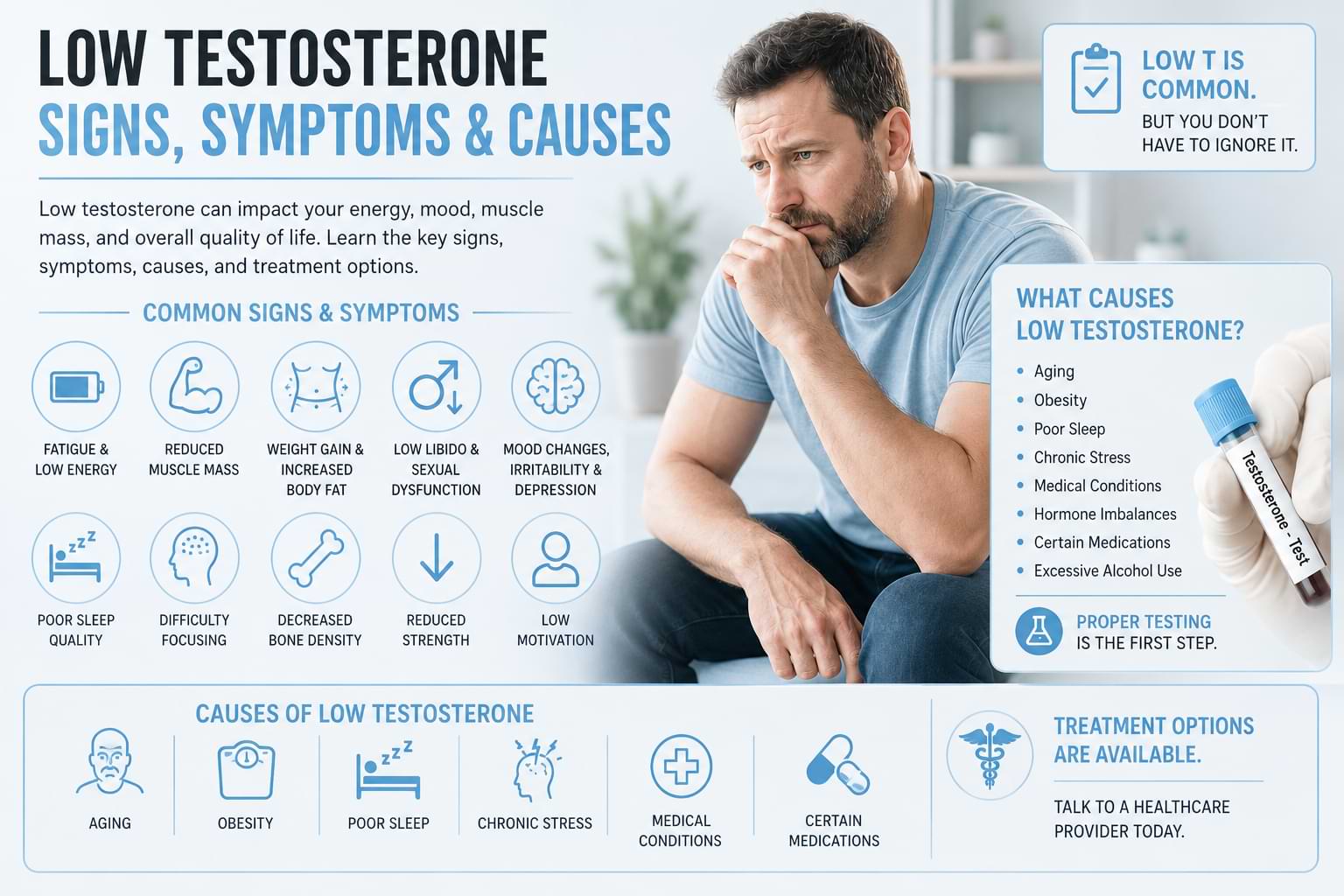
Common Low Testosterone Symptoms
Low testosterone symptoms can vary from person to person.
Some men experience only mild symptoms, while others notice significant physical and emotional changes.
Common Symptoms of Low Testosterone
- Fatigue or low energy
- Reduced libido
- Erectile dysfunction
- Loss of muscle mass
- Increased body fat
- Difficulty concentrating
- Mood changes
- Reduced motivation
- Poor exercise recovery
- Decreased strength
Symptoms may develop gradually over time and are often mistaken for normal aging or stress.
Physical Signs of Low Testosterone
Several physical changes may occur when testosterone levels decline.
Reduced Muscle Mass
Testosterone plays an important role in muscle development and maintenance.
Men with low testosterone may notice:
- difficulty building muscle
- reduced strength
- slower recovery after workouts
Increased Body Fat
Low testosterone may contribute to:
- weight gain
- increased abdominal fat
- reduced metabolic efficiency
Some men also experience mild breast tissue enlargement due to hormone imbalance.
Reduced Libido & Sexual Performance
Low testosterone may affect:
- sex drive
- sexual performance
- erectile function
Many men first seek medical evaluation because of changes in libido or sexual health.
Fatigue & Low Energy
Persistent fatigue is one of the most commonly reported low testosterone symptoms.
Some men experience:
- reduced stamina
- lower motivation
- decreased physical performance
Mental & Emotional Symptoms
Low testosterone may also affect mental and emotional well-being.
Possible Emotional Symptoms
- Irritability
- Mood swings
- Depression symptoms
- Reduced confidence
- Difficulty focusing
- Brain fog
Hormonal changes may affect neurotransmitters and overall mental performance.
However, many of these symptoms may also overlap with:
- stress
- poor sleep
- anxiety
- depression
- lifestyle factors
This is why proper medical evaluation is important.
What Causes Low Testosterone?
Several medical and lifestyle factors may contribute to testosterone deficiency.
Common Causes of Low Testosterone
- Aging
- Obesity
- Poor sleep
- Chronic stress
- Diabetes
- Hormonal disorders
- Pituitary gland conditions
- Certain medications
- Excessive alcohol use
- Sleep apnea
In some cases, low testosterone may result from underlying medical conditions affecting hormone production.
Risk Factors for Low T
Some men may have a higher risk of developing low testosterone.
Risk Factors Include
- Age over 30–40
- Obesity
- Sedentary lifestyle
- Poor nutrition
- Chronic illness
- High stress levels
- Poor sleep quality
- Type 2 diabetes
- Metabolic syndrome
Lifestyle habits can significantly influence testosterone production and hormone balance.
How Low Testosterone Is Diagnosed
Low testosterone should only be diagnosed through proper medical evaluation and laboratory testing.
Diagnosis Typically Includes
- Medical history review
- Symptom evaluation
- Blood testing
- Hormone panel analysis
- Physical examination
Healthcare providers commonly evaluate:
- Total testosterone
- Free testosterone
- Estrogen levels
- LH and FSH hormones
- Thyroid function
Testosterone levels are usually tested in the morning when hormone levels are highest.
⚠️ Symptoms alone are not enough to diagnose low testosterone without blood work.
When Should You See a Doctor?
Men experiencing persistent symptoms should consider speaking with a healthcare provider.
Consider Medical Evaluation If You Experience
- Ongoing fatigue
- Reduced libido
- Erectile dysfunction
- Unexplained weight gain
- Difficulty building muscle
- Mood changes
- Poor recovery
- Low motivation
Proper evaluation can help determine whether symptoms are related to testosterone levels or another underlying health condition.
According to the Mayo Clinic, testosterone therapy should only be used after appropriate medical evaluation and laboratory testing.
Can Low Testosterone Be Treated?
Treatment depends on:
- hormone levels
- symptom severity
- overall health
- underlying medical causes
Some men may improve testosterone levels through:
- weight loss
- improved sleep
- exercise
- stress management
- nutrition improvements
Others may require medical treatment such as testosterone replacement therapy under physician supervision.
Common TRT Treatment Options
- Testosterone injections
- TRT gels and creams
- Testosterone pellets
- Oral testosterone medications
Patients considering treatment should discuss risks, benefits, and long-term monitoring requirements with a qualified healthcare provider.
Frequently Asked Questions About Low Testosterone
What are the first signs of low testosterone?
Common early symptoms may include fatigue, reduced libido, decreased motivation, and difficulty recovering from exercise.
Can low testosterone cause weight gain?
Yes. Low testosterone may contribute to increased body fat and reduced muscle mass.
At what age does testosterone decline?
Testosterone levels naturally decline gradually with age, often beginning after age 30.
Can stress lower testosterone?
Chronic stress may negatively affect hormone production and overall testosterone levels.
How do doctors test for low testosterone?
Healthcare providers typically diagnose low testosterone using blood tests and symptom evaluation.
Can low testosterone be treated naturally?
Lifestyle improvements such as exercise, sleep optimization, weight management, and stress reduction may help support healthy testosterone levels in some men.
Read Our Complete TRT Pricing Guide
Patients researching testosterone replacement therapy can also review our complete guide:
This article covers:
- TRT monthly pricing
- Injection costs
- Online TRT clinics
- Insurance coverage
- Pellet therapy pricing
- Long-term treatment expenses
Speak With a Licensed Healthcare Provider
If you believe you may have symptoms of low testosterone, consult with a qualified healthcare provider for proper evaluation, blood testing, diagnosis, and personalized treatment guidance.
Medical Review Information
Written by: Hormone Online Media Team
Last Updated: May 2026
Reviewed for educational TRT informational guidance