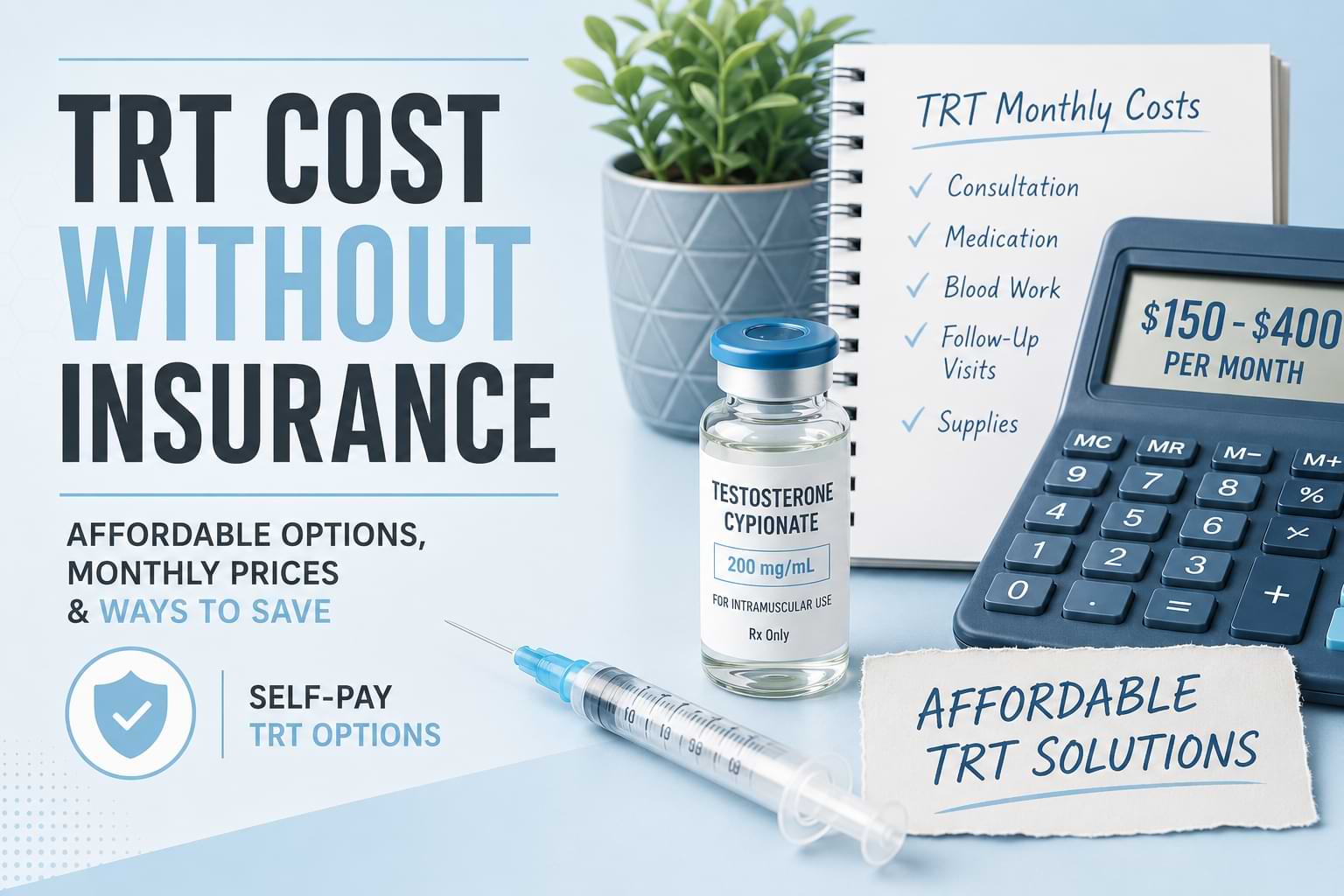
TRT Cost Without Insurance: Affordable Monthly Pricing, Clinics & Ways to Save
Many patients researching testosterone replacement therapy want to understand the TRT cost without insurance before starting treatment.
The average TRT cost without insurance typically ranges between $100 and $400 monthly depending on the provider, medication type, blood work requirements, and follow-up care.
For uninsured patients, testosterone replacement therapy costs may include:
- Physician consultations
- Blood testing
- Testosterone medication
- Follow-up monitoring
- Injection supplies
- Additional medications
This guide explains how uninsured patients can reduce TRT expenses, compare affordable treatment options, and understand the real monthly costs of testosterone replacement therapy.
⚠️ Medical Disclaimer: This article is for educational purposes only and does not replace professional medical advice, diagnosis, or treatment. Testosterone Replacement Therapy should only be started after proper medical evaluation and blood testing by a licensed healthcare provider.
💡 Quick Answer: The average TRT cost without insurance is between $100 and $400 per month, with testosterone injections usually being the most affordable option.
Table of Contents
- Average TRT Cost Without Insurance
- Why TRT Costs More Without Insurance
- Cheapest Forms of TRT
- Online TRT Clinics vs Local Clinics
- Ways to Lower TRT Costs Without Insurance
- Hidden TRT Expenses
- Is Cheap TRT Safe?
- Frequently Asked Questions
Average TRT Cost Without Insurance
The average TRT cost without insurance depends on several factors, including medication type, dosage requirements, clinic pricing, and lab testing frequency.
Typical Monthly TRT Pricing
| TRT Service | Average Monthly Cost |
|---|---|
| Testosterone Injections | $40 – $150 |
| TRT Gels or Creams | $100 – $300 |
| Online TRT Clinics | $150 – $400 |
| Blood Work | $50 – $200 |
| Follow-Up Visits | $50 – $150 |
Many uninsured patients choose injectable testosterone because it is typically the lowest-cost TRT option.
Why TRT Costs More Without Insurance
Patients without insurance coverage often pay full retail pricing for testosterone therapy services.
This may include:
- Initial physician consultations
- Comprehensive blood panels
- Prescription testosterone medication
- Follow-up appointments
- Ongoing laboratory monitoring
Unlike insured patients who may only pay deductibles or copays, uninsured individuals are responsible for the full cost of treatment.
However, many clinics now offer self-pay TRT programs designed specifically for uninsured patients.
Cheapest Forms of TRT
Different TRT methods have very different pricing structures.
Testosterone Injections
💡 Most Affordable TRT Option
Testosterone injections are usually the cheapest form of testosterone replacement therapy.
Average Monthly Cost
$40 to $150
Benefits
- Lower monthly cost
- Generic testosterone availability
- Flexible dosing
- Widely prescribed
Drawbacks
- Requires regular injections
- Ongoing supply purchases
Many uninsured patients prefer injections because they provide a balance between affordability and effectiveness.
TRT Gels and Creams
Topical testosterone products generally cost more than injections.
Average Monthly Cost
$100 to $300
Benefits
- Needle-free treatment
- Convenient daily application
Drawbacks
- Higher monthly expenses
- Daily use required
- Potential transfer risks
Testosterone Pellet Therapy
Pellet therapy is generally one of the most expensive TRT methods.
Average Cost
$300 to $800 every 3–6 months
Pellet therapy may appeal to patients looking for longer-lasting testosterone delivery with fewer maintenance sessions.
Online TRT Clinics vs Local Clinics
Many uninsured patients compare online TRT providers with traditional local clinics to reduce treatment costs.
Online TRT Clinics
Advantages
- Predictable monthly pricing
- Telemedicine consultations
- Home medication delivery
- Subscription-based treatment plans
Potential Drawbacks
- Monthly membership fees
- Limited in-person evaluations
Many online TRT clinics provide bundled pricing that includes consultations, prescriptions, and follow-up monitoring.
Local TRT Clinics
Advantages
- In-person physician access
- Physical evaluations
- Local laboratory relationships
Potential Drawbacks
- Higher consultation fees
- More appointment scheduling
- Less pricing transparency
Some local clinics charge separately for labs, prescriptions, and follow-up visits, which may increase overall TRT costs without insurance.
Ways to Lower TRT Costs Without Insurance
Many patients look for ways to reduce ongoing testosterone replacement therapy expenses safely.
Compare Online TRT Clinics
Some telemedicine TRT providers offer lower monthly pricing than traditional clinics.
Choose Injectable Testosterone
Injectable testosterone is usually the least expensive TRT treatment option.
Use Generic Testosterone Medications
Generic testosterone products are often significantly cheaper than brand-name alternatives.
Compare Pharmacy Pricing
Prescription testosterone pricing may vary significantly between pharmacies.
Some patients compare pharmacy pricing through discount programs or prescription savings services.
Ask About Bundled Pricing
Some TRT clinics combine blood work, consultations, prescriptions, and follow-up monitoring into one monthly fee.
⚠️ Patients should avoid unregulated testosterone products or underground steroid sources simply to reduce treatment costs.
TRT should always be supervised by a licensed healthcare provider.
Hidden TRT Expenses
Many patients underestimate the long-term costs associated with testosterone replacement therapy.
Common Additional Costs
| Additional Expense | Estimated Price |
|---|---|
| Blood Panels | $50 – $200 |
| HCG Medication | $50 – $150 |
| Aromatase Inhibitors | $20 – $80 |
| Syringes & Supplies | $10 – $40 |
| Shipping Fees | Variable |
Additional specialist consultations may also increase overall TRT costs for some patients.
Is Cheap TRT Safe?
Low-cost TRT programs may still be safe when supervised properly by licensed healthcare providers.
Safe TRT programs should include:
- Blood testing
- Physician oversight
- Prescription management
- Follow-up monitoring
- Ongoing evaluation
⚠️ TRT should never be started without proper laboratory testing and professional medical supervision.
According to the Mayo Clinic, testosterone therapy may help improve symptoms associated with low testosterone when prescribed appropriately by a healthcare provider.
Frequently Asked Questions About TRT Cost Without Insurance
Can I get TRT without insurance?
Yes. Many clinics and telemedicine providers offer self-pay testosterone replacement therapy programs.
How much does TRT cost monthly without insurance?
Most patients spend between $100 and $400 monthly depending on medication type, provider, and treatment plan.
What is the cheapest form of TRT?
Testosterone injections are generally considered the least expensive TRT option.
Are online TRT clinics cheaper?
In many cases, yes. Online TRT clinics often provide bundled pricing that may reduce overall treatment costs.
Do I still need blood work without insurance?
Yes. Blood testing is typically required before and during TRT treatment regardless of insurance coverage.
Read Our Complete TRT Pricing Guide
Patients researching testosterone replacement therapy pricing can also read our complete guide:
This article covers:
- TRT monthly pricing
- Insurance coverage
- Injection costs
- Pellet therapy pricing
- Hidden TRT fees
- Long-term treatment expenses
Speak With a Licensed TRT Provider
If you believe you may have symptoms of low testosterone, consult with a qualified healthcare provider for proper evaluation, blood testing, diagnosis, and personalized treatment guidance.
Medical Review Information
Written by: Hormone Online Media Team
Last Updated: May 2026
Reviewed for educational TRT informational guidance