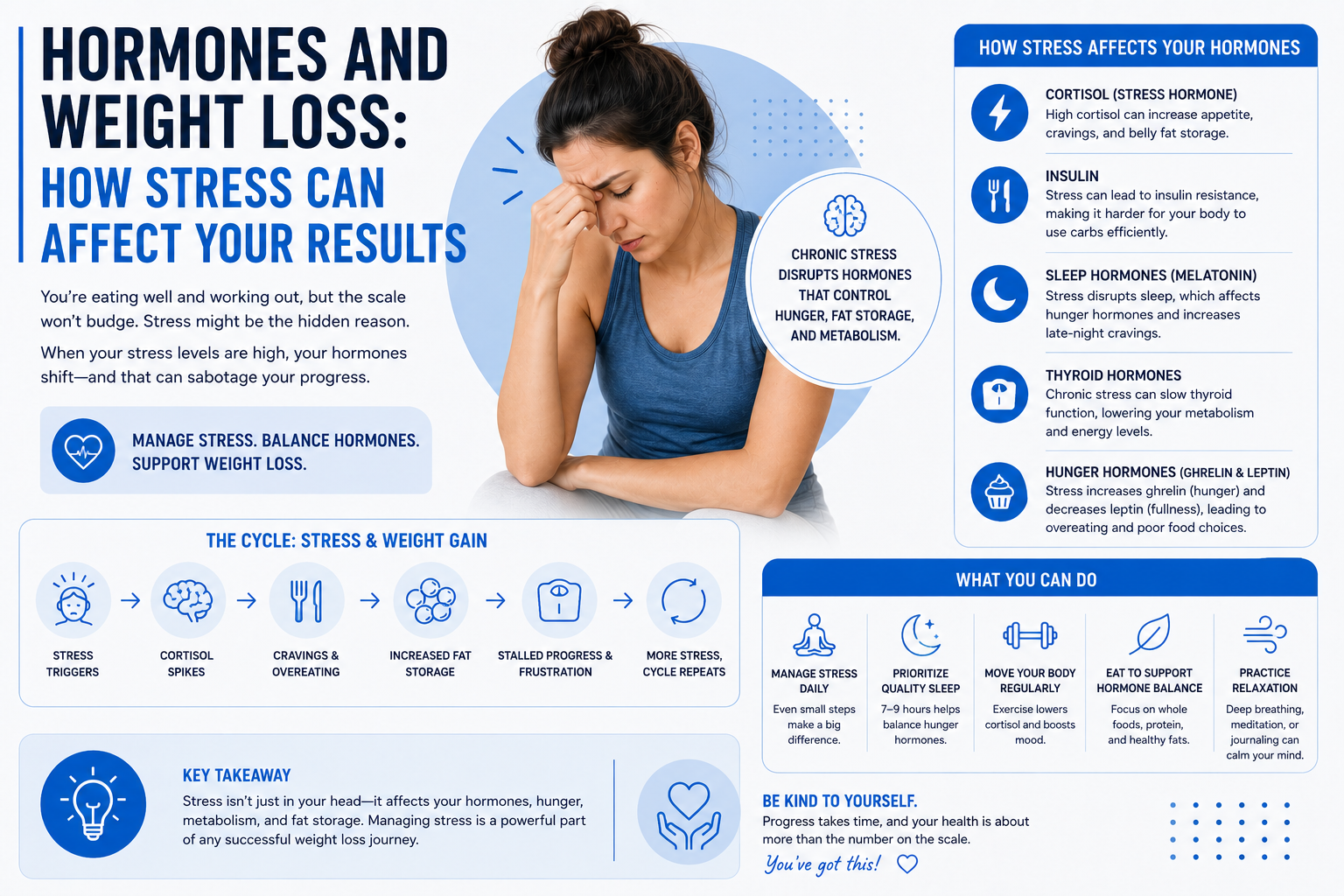
Have you ever felt like you’re doing everything right—eating healthy foods, exercising consistently, and watching your calorie intake—yet the scale barely moves? The answer may lie in the connection between hormones and weight loss. Stress can have a significant impact on your body’s ability to lose weight and maintain a healthy metabolism.
Understanding Hormones and Weight Loss
Hormones act as chemical messengers that regulate many important functions in the body, including metabolism, appetite, energy levels, and fat storage. When hormones are balanced, your body is better able to burn calories efficiently and manage hunger signals.
However, chronic stress can disrupt this balance and make weight loss more difficult.
⚠️ Medical Disclaimer: This article is for educational purposes only and does not replace professional medical advice, diagnosis, or treatment. Weight loss challenges can have various causes and should be evaluated by a qualified healthcare provider who can offer personalized recommendations based on your individual health needs.
How Stress Hormones Influence Weight Loss
When you’re under stress, your body releases cortisol, commonly known as the stress hormone. While cortisol is helpful in short-term situations, prolonged elevations can create challenges for weight management.
High cortisol levels may:
- Increase cravings for sugary and high-calorie foods
- Encourage fat storage, particularly around the abdominal area
- Slow metabolic processes
- Contribute to fatigue and reduced motivation to exercise
- Interfere with healthy sleep patterns
Over time, these effects can make it harder to achieve your weight loss goals.
Source: HealthLine – 14 Common Reasons You’re Not Losing as Much Weight as You Expected
Appetite and Cravings
Stress can also affect hormones that control hunger and fullness, including leptin and ghrelin. When these hormones become imbalanced, you may experience increased hunger, stronger cravings, and a tendency to overeat.
This is one reason many people find themselves reaching for comfort foods during stressful periods.
Supporting Healthy Hormones and Weight Loss
Managing stress is an important part of maintaining hormonal balance and supporting weight loss efforts. Helpful strategies include:
- Getting 7–9 hours of quality sleep each night
- Engaging in regular physical activity
- Practicing relaxation techniques such as meditation or deep breathing
- Staying hydrated throughout the day
- Following a balanced diet rich in protein, fiber, and whole foods
Small lifestyle changes can have a positive impact on both stress levels and overall health.
Final Thoughts
The connection between hormones and weight loss is often overlooked, but it can play a major role in your results. Chronic stress may increase cortisol levels, affect appetite-regulating hormones, and encourage fat storage. By prioritizing stress management and healthy habits, you can better support your body’s natural weight loss processes and improve your long-term success.
Related Reading: Also explore our articles on Calorie Miscalculation and Weight Loss and Body Composition Changes During Weight Loss to learn more about factors that may affect your progress.
Speak With a Licensed Healthcare Provider
If weight loss has stalled despite your efforts, consult a qualified healthcare provider for personalized guidance and support.
Medical Review Information
Written by: Hormone Online Media Team
Reviewed for educational Weight Loss informational guidance