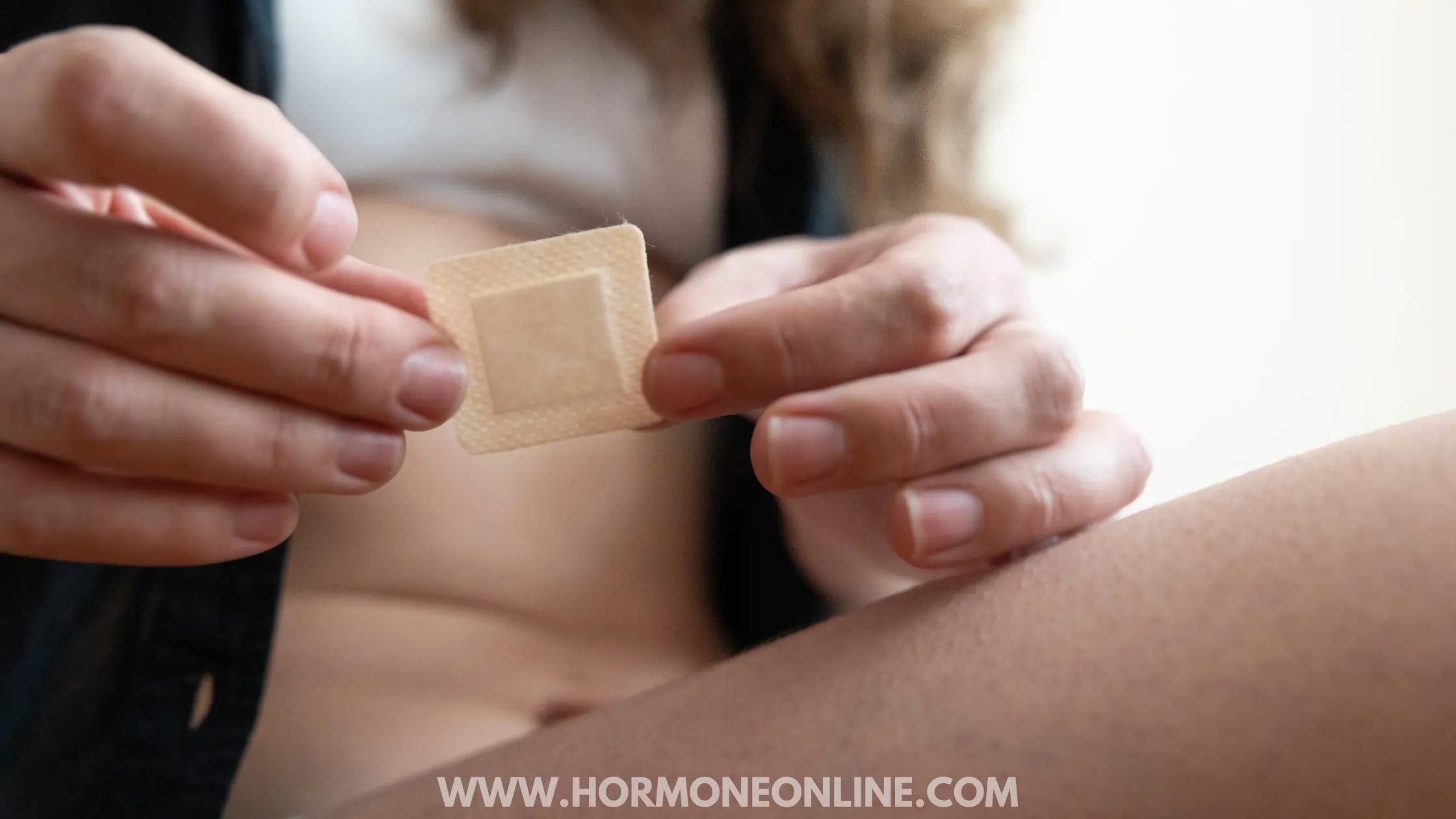
If you use hormone replacement therapy (HRT) for menopause symptoms, you may have noticed that your estrogen patch comes with specific instructions about where to place it. Many estradiol patches are designed to be applied below the waist, usually on the lower abdomen or buttocks.
But why does placement matter? Why can’t you simply put an HRT patch on your upper arm, shoulder, or chest?
The answer involves medication-specific instructions, skin absorption, patch adhesion, and an important precaution about avoiding direct application to breast tissue.
Using an HRT patch correctly helps you follow the treatment instructions established for that product. It can also reduce problems such as patches coming loose or irritating the skin.
In this guide, we explain why many estrogen patches are applied below the waist, which areas are generally recommended, and what to know before using your medication.
What Are HRT Patches?
HRT patches are adhesive patches that deliver hormones through the skin and into the bloodstream. They are commonly used to provide estrogen to people experiencing menopause-related symptoms.
Many menopausal estrogen patches contain estradiol, a form of estrogen. Once applied, the medication passes through the skin and enters the circulation.
Depending on the product and prescribed treatment plan, estrogen patches may help manage symptoms such as:
-
Hot flashes and night sweats.
-
Vaginal and urinary symptoms associated with menopause, although localized vaginal treatments may be more appropriate for some symptoms.
-
Sleep disruption associated with menopausal symptoms.
-
Other symptoms related to declining estrogen levels.
Some people also use systemic estrogen therapy to help prevent bone loss when clinically appropriate.
HRT patches are available in different strengths and application schedules. Some need to be changed once a week, while others are replaced twice weekly. Always follow the instructions for your particular product.
Why Do HRT Patches Need to Be Below the Waist?
Many estradiol patch products instruct users to apply the patch to the lower abdomen or buttocks. Some clinical guidance also identifies the thigh as an appropriate location, depending on the product.
There are several reasons for these placement instructions.
1. To Follow the Product’s Tested Application Instructions
One of the most important reasons is that the recommended application site is part of the medication’s approved instructions.
Different estradiol patches have different product formulations and application directions. The manufacturer specifies where the patch should be placed based on the product’s testing and labeling.
For example, U.S. prescribing information for several estradiol transdermal systems identifies the lower abdomen or buttocks as recommended application sites.
Using an unlisted location may not follow the product’s instructions. Do not assume that a patch approved for the lower abdomen or buttocks can be placed anywhere on the body.
2. To Avoid Direct Application to Breast Tissue
A major instruction for many estrogen patches is to avoid applying them to or near the breasts.
This is an important precaution because estrogen is a hormone that acts on breast tissue. Applying an estrogen patch directly to the breasts would create an unnecessary area of direct hormone exposure.
However, it is important to understand the distinction: estrogen delivered through a patch enters the bloodstream and can affect tissues throughout the body, including the breasts. Applying the patch below the waist does not prevent systemic estrogen exposure or eliminate breast-related risks associated with hormone therapy.
The recommendation is to avoid direct application to breast tissue and follow the medication’s approved placement instructions.
3. To Help the Patch Stay in Place
Patch adhesion is another practical consideration.
The waistline may be exposed to friction from belts, elastic waistbands, and tight clothing. These can rub against the patch and cause it to loosen or come off.
Some product instructions specifically advise avoiding the waistline for this reason.
A patch that does not remain securely attached may interfere with consistent medication delivery. Choosing an appropriate application site helps reduce the chance of accidental removal.
4. To Support Reliable Medication Delivery
Estradiol patches are designed to deliver a specific amount of medication over a set period when used according to their instructions.
The recommended application site is part of how the product is intended to be used.
Applying the patch to an unapproved location should not be considered an alternative way to improve absorption or increase its effectiveness.
If you feel your HRT is not controlling your symptoms, speak with your healthcare provider. They can review your dose, application technique, adherence, and other possible reasons for inadequate symptom relief.
Where Should You Put an HRT Patch?
The correct location depends on the brand and formulation you have been prescribed.
For many estradiol patches, common recommended areas include:
-
Lower abdomen: Some products specifically instruct users to apply the patch below the belly button.
-
Buttocks: Certain estradiol patches allow application to the upper or appropriate area of the buttocks.
-
Thigh: Some healthcare guidance identifies the thigh as an option, but only use it if your specific product’s instructions allow it.
Always check the patient information leaflet or ask your pharmacist if you are unsure where your patch should go.
Where should you avoid applying an HRT patch?
For many estradiol patch products, avoid applying the patch to:
-
The breasts or areas near the breasts.
-
The waistline where clothing may rub against it.
-
Skin with cuts, irritation, rashes, or other damage.
-
Areas with creams, oils, powders, or moisturizers that may interfere with adhesion.
-
Skin folds or areas where friction may cause the patch to loosen.
Some products also specify that the patch should not be placed where sitting or movement may dislodge it.
Does HRT Patch Placement Affect Absorption?
Yes, application conditions can matter, but this does not mean that placing a patch higher or lower automatically makes it more effective.
Transdermal estradiol is absorbed through the skin. Product instructions specify the areas that should be used for that particular patch.
Skin condition, product formulation, adhesion, and correct application can all influence how well the medication is delivered.
For this reason, you should not experiment with different body locations to try to increase hormone absorption.
If your patch repeatedly falls off, or you experience unexpected changes in symptoms, ask your healthcare provider or pharmacist to review your application technique and treatment plan.

How to Apply an HRT Patch Correctly
Following the correct application process can help your patch stay attached and deliver medication as intended.
Here are general steps for many estradiol patches. Your own product leaflet takes priority if its instructions differ.
Step 1: Choose the correct application site
Select a location permitted by your specific medication’s instructions, such as the lower abdomen or buttocks.
Avoid the breasts, irritated skin, and areas where clothing may rub against the patch.
Step 2: Clean and dry your skin
Make sure the application area is clean, dry, and free of oils, lotions, powders, or creams.
Some products also recommend applying the patch to cool skin.
Step 3: Open the package carefully
Remove the patch from its protective packaging according to the manufacturer’s instructions.
Avoid touching the adhesive surface more than necessary.
Step 4: Apply the patch
Place the adhesive side against your skin and press it firmly according to the product’s instructions.
Make sure the edges are securely attached.
Step 5: Follow your replacement schedule
Some patches are changed once weekly, while others need replacement twice weekly.
Set reminders if necessary so you do not miss your scheduled changes.
Step 6: Rotate application sites
Use a different approved area when applying a new patch.
Many product labels recommend waiting at least one week before applying a patch to the same site again. Check your own product instructions for the exact interval.
What If Your HRT Patch Falls Off?
A patch may occasionally loosen or fall off because of sweating, friction, skin oils, or contact with water.
What you should do depends on your specific product.
Some instructions allow you to reapply the same patch if it still sticks properly. Others recommend applying a replacement patch to a different approved location.
If the patch cannot be reapplied, follow the manufacturer’s instructions or contact your pharmacist for guidance.
Do not automatically apply an additional patch or change your medication schedule without checking the instructions. Using more medication than prescribed can increase the risk of unwanted effects.
Are There Risks Associated With HRT Patches?
HRT patches deliver estrogen through the skin, but they are still systemic hormone treatments when used for menopausal hormone therapy.
Like other prescription medications, they have potential benefits and risks.
Possible side effects of estrogen patches include:
-
Breast tenderness or discomfort.
-
Headaches.
-
Nausea.
-
Skin irritation at the application site.
-
Bloating.
-
Changes in vaginal bleeding patterns.
Systemic estrogen therapy may also carry more serious risks, depending on factors such as age, medical history, dose, duration of use, and whether a progestogen is also prescribed.
For people with a uterus, systemic estrogen generally needs to be combined with an appropriate progestogen to help protect the uterine lining from estrogen-related overgrowth. There may be exceptions based on individual circumstances and specific treatments.
Your healthcare provider should review your medical history and discuss the benefits and risks before starting or continuing treatment.
Does applying an HRT patch below the waist reduce cancer risk?
No. Applying an estrogen patch below the waist does not eliminate the risks associated with systemic hormone therapy.
Patch placement is primarily about following product-specific instructions, avoiding direct application to breast tissue, and maintaining appropriate adhesion.
Cancer-related risks depend on the type of hormone therapy, whether estrogen is combined with a progestogen, treatment duration, and individual risk factors.
Do not change your application location or treatment plan based on assumptions about cancer prevention. Discuss personal concerns with your healthcare provider.
Frequently Asked Questions
Can I put my estrogen patch on my upper arm?
Only if the instructions for your specific product allow that location. Many commonly prescribed estradiol patches specify the lower abdomen or buttocks. Do not assume that all estrogen patches can be applied to the upper arm.
Can I put an HRT patch on my stomach?
Yes, many estradiol patches are designed for the lower abdomen, often below the belly button. However, avoid the waistline and follow your product’s instructions about the exact application area.
Can I put an estrogen patch on my buttocks?
Some estradiol patches specifically allow application to the buttocks, often in an appropriate upper area. Check your medication leaflet for the recommended location.
Why should estrogen patches not be placed on the breasts?
Many product instructions specifically prohibit application to or near the breasts. This precaution avoids direct application of estrogen to breast tissue. It does not mean that systemic estrogen delivered through the patch cannot affect breast tissue.
Can I shower or swim while wearing an HRT patch?
Many estradiol patches are designed to remain attached during normal bathing and showering. However, instructions vary by product, and prolonged water exposure or other conditions may affect adhesion. Check your medication leaflet if you swim frequently or notice that your patch comes loose.
Should I change the location every time I replace my patch?
Generally, yes. Rotating approved application sites helps reduce repeated irritation in one area. Follow the specific rotation instructions provided with your medication.
What happens if I put my HRT patch in the wrong place?
You may not be following the product’s approved instructions, and the effect on medication delivery may be uncertain. If you have applied it to an unapproved area, contact your pharmacist or prescriber for advice rather than guessing whether to move or replace it.

Final Thoughts: Follow the Correct HRT Patch Placement Instructions
Many estrogen HRT patches are designed to be applied below the waist because their product instructions specify areas such as the lower abdomen or buttocks. These instructions help ensure that the medication is used as intended, reduce the chance of the patch rubbing off, and avoid direct application to breast tissue.
However, not every HRT patch has identical placement requirements. The correct location depends on the specific brand and formulation.
If you are unsure where to apply your patch, check the medication leaflet or ask your healthcare provider or pharmacist. Correct application is an important part of using HRT safely and consistently.
At Hormone Online, we believe that understanding your treatment is an important part of making informed healthcare decisions. If you are exploring hormone replacement therapy or have questions about your treatment options, speak with a qualified healthcare professional.
Visit Hormone Online or contact our team to learn more about our services.
Medical Disclaimer
This article is for educational and informational purposes only. It does not replace professional medical advice, diagnosis, or treatment. HRT is not appropriate for everyone, and the benefits and risks vary depending on individual health history and treatment needs. Always follow the prescribing information for your specific medication and consult a qualified healthcare professional before changing your treatment or application routine.
We Offer Telemedicine Hormone Replacement Therapy Services.
Access expert HRT care from the comfort of your home. We provide virtual consultations in these key cities and regions.
➡️ Start Your Virtual Consultation Today! / Hormone Replacement Therapy Port Saint Lucie
Take the Next Step Toward Optimized Living
Your wellness journey doesn’t end here. It evolves with the right guidance, research, and support.
Subscribe to Hormone Online Insights
Connect with a Hormone Specialist
Explore Our Evidence Based Resource Library