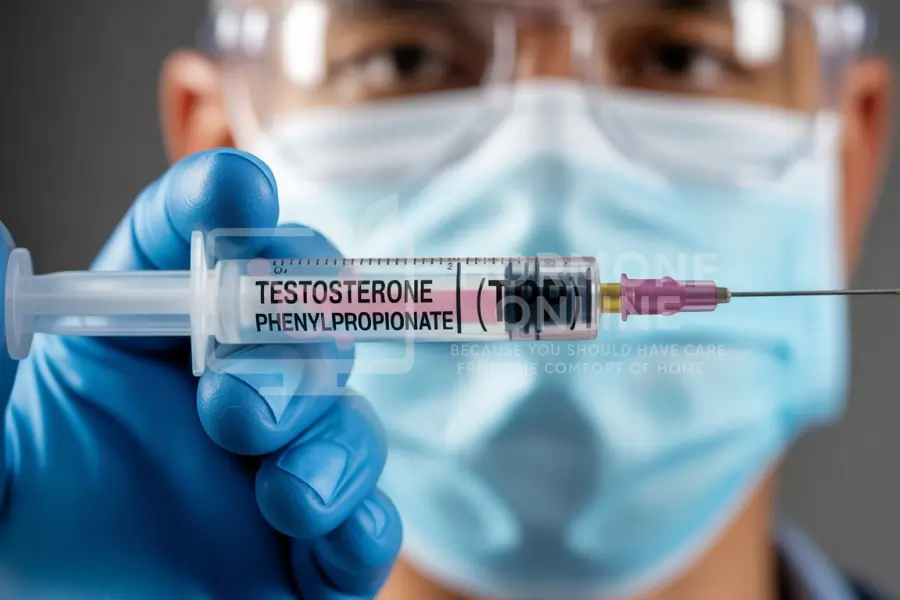
Testosterone Phenylpropionate (TPP) is a short-acting ester of testosterone that has gained traction in both clinical and performance-enhancement contexts. While less commonly discussed than Testosterone Enanthate or Cypionate, TPP offers distinct pharmacokinetic properties that make it relevant for specific use cases. This article unpacks its mechanism, benefits, and scientific grounding.
What Is Testosterone Phenylpropionate?
Testosterone Phenylpropionate is an injectable anabolic-androgenic steroid (AAS) derived from testosterone, modified with a phenylpropionate ester. This ester impacts the release rate of the hormone into the bloodstream, resulting in a relatively short half-life compared to longer esters.
From a biochemical standpoint, once administered, the ester is cleaved, releasing free testosterone that binds to androgen receptors, influencing protein synthesis, muscle growth, and secondary male characteristics.
Testosterone Phenylpropionate: Pharmacokinetics and Mechanism of Action
The phenylpropionate ester slows the release of testosterone slightly, but not as extensively as longer esters like enanthate. This results in:
- Faster onset of action
- Shorter half-life (~2–4 days)
- More stable blood serum levels with frequent dosing
This profile makes TPP suitable for users seeking tighter hormonal control or reduced water retention.
 Potential Benefits
 Potential Benefits
From a physiological and performance perspective, Testosterone Phenylpropionate may offer:
- Enhanced nitrogen retention and protein synthesis
- Improved recovery rates
- Lean muscle mass development
- Reduced estrogenic side effects (relative to longer esters, depending on dosing strategy)
However, outcomes vary significantly depending on dosage, frequency, and individual endocrine response.
Testosterone Phenylpropionate: Clinical and Scientific Context
While TPP is less frequently used in mainstream hormone replacement therapy (HRT), testosterone esters as a class are well-studied in endocrinology.
Relevant scientific insights include:
- Testosterone therapy’s role in muscle mass and metabolic health
- Esterification and its impact on hormone release kinetics
- Androgen receptor activation pathways
We Offer Telemedicine Hormone Replacement Therapy Services.
Access expert HRT care from the comfort of your home. We provide virtual consultations in these key cities and regions.
➡️ Start Your Virtual Consultation Today! / Testosterone Replacement Therapy Online Port Saint Lucie
Risks and Considerations
Despite its benefits, TPP carries potential risks:
- Suppression of endogenous testosterone production
- Cardiovascular strain (lipid profile changes)
- Estrogen-related side effects (if aromatization occurs)
- Need for post-cycle therapy (PCT) in non-clinical use
Professional medical oversight is strongly recommended in any therapeutic context.
 Validated & Accessible
 Validated & Accessible
- Testosterone Therapy for Hypogonadism Guidelines (Endocrine Society)
→ Authoritative clinical guideline outlining diagnosis, treatment protocols, and risk considerations for testosterone therapy. - Testosterone Therapy in Men With Hypogonadism (JCEM Clinical Guideline)
→ Peer-reviewed guideline detailing evidence-based recommendations and endocrine system impacts. - Testosterone (Medication Overview & Clinical Use)
→ Broad scientific overview of testosterone applications, including therapeutic use and physiological effects.
Conclusion
Testosterone Phenylpropionate represents a niche but strategically valuable testosterone ester with unique pharmacokinetic advantages. Its shorter half-life allows for greater dosing precision, making it relevant in both clinical and performance-driven frameworks when used responsibly.
Take the Next Step Toward Optimized Living
Your wellness journey doesn’t end here. It evolves with the right guidance, research, and support.
Subscribe to Hormone Online Insights
Connect with a Hormone Specialist
Explore Our Evidence Based Resource Library